Photos · 187 from the road
South America
Chile

On their way to work
Although Chile is a modern country, in the country-side a horse and a poncho is still the way to go.

Perfect campsite in the Atacama desert
A good thing about camping in the Atacama desert: There is absolutely no chance that it will rain.

Perfect bathroom in the Atacama desert
There is always a friendly neighbor that has some water so you can wash and shave in the morning. And if your lucky, they also have a small breakfast place.

Art in the Atacama desert
There you go, pokin along, minding your own business and then suddenly a giant hand tries to grab you. It's not the sun, it's art.
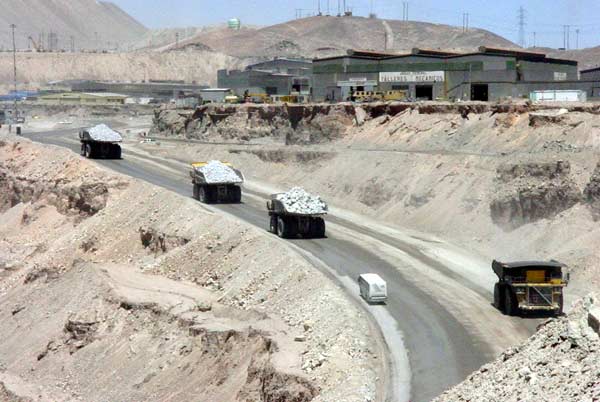
Copper in the Atacama desert
Atacama copper, the largest open pit copper mine is a hole in the ground 900 meters deep. Giant trucks take out the ore for processing. To grasp the size of these 300 ton haul-trucks compare the tour-bus behind the three trucks. That is not a dinky-toy.
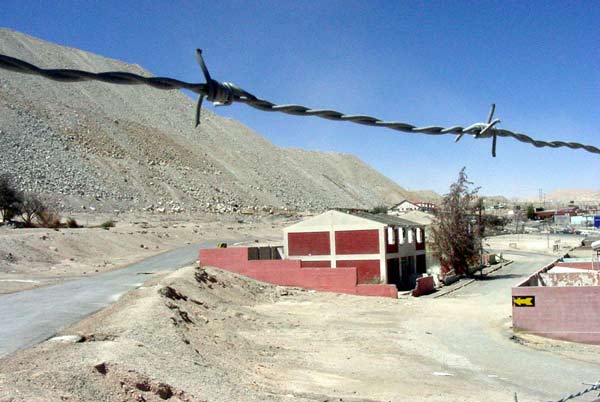
Copper in the Atacama desert
Chuquicamata is a sad town. In a few years it will be gone. Buried under millions of tons of mining debris. The inhabitants are being moved to Calama, 15 Km down the road.
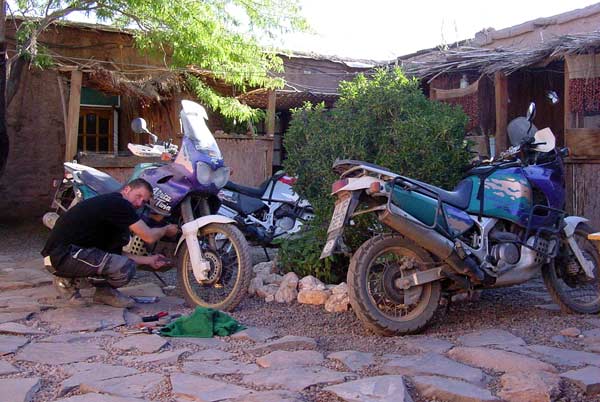
San Pedro de Atacama
Our little adobe guesthouse was full with Africa Twins. I met Peter and frank while waiting for the copper mine to open. Later we would meet again.
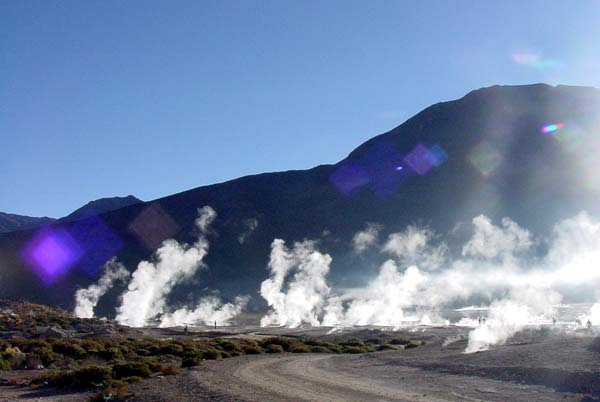
Geysers del Tatio
At a freezing 4,700 meters altitude, at seven in the morning. Dozens of geysers, some small and bubbly, some big and boiling.

Little church in the desert
It walked straight out of an Ennio Morricone western. A tiny little church in the middle of the desert near San Pedro. I stumbled across it coming back from the geysers del Tatio.

Vicuñas on the altiplano
High on the altiplano this elegant type of llama survives by licking the salty ground.
Argentina

Passo de Jamma
Crossing over the Andes by the 'passo de Jamma' should have been a reasonable ride... If you keep on the right track. I wanted to end up at San Antonia de los Cobres and Ruta 40. That was a bit more tricky. But, with the usual doses of luck, I made it in one piece.
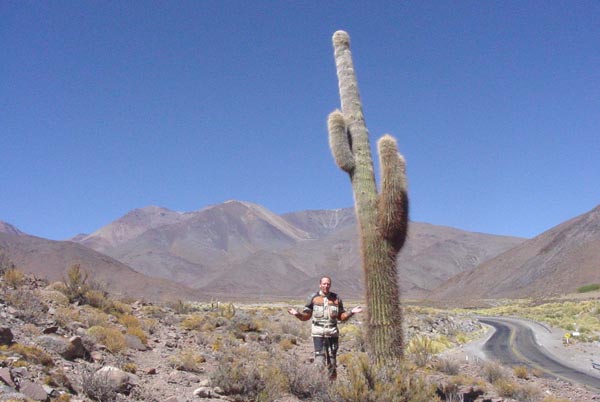
What good is a cactus?
They don't provide you with shade when it is hot. You can not lean against them if your tired. You can't build a tree house in them and the wood is mainly unusable. So what good are these damn cactuses (or is it cacti?)
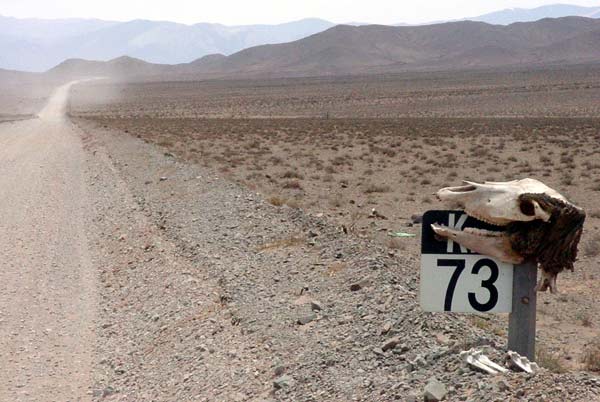
A multi lane highway
The map showed this as a 'multi lane highway'. I wonder what a 'road of local importance' looks like.
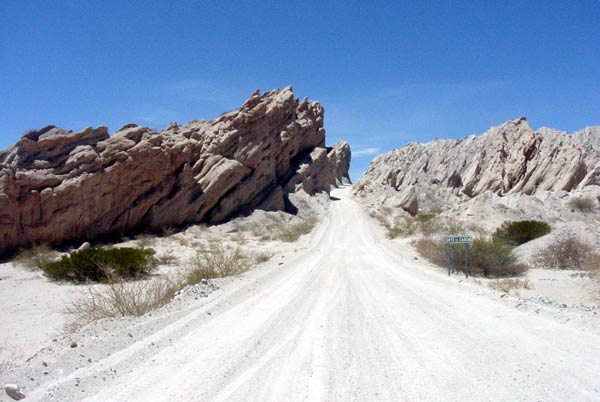
The start of ruta 40
Ruta 40 is a famous road that leads all the way from north Argentina to the bottom of the continent roughly 4,000 Km to the south. It's fame in South America is a bit like 'Route 66' in the USA. Except that it's a lot longer, a lot rougher and mostly unpaved.
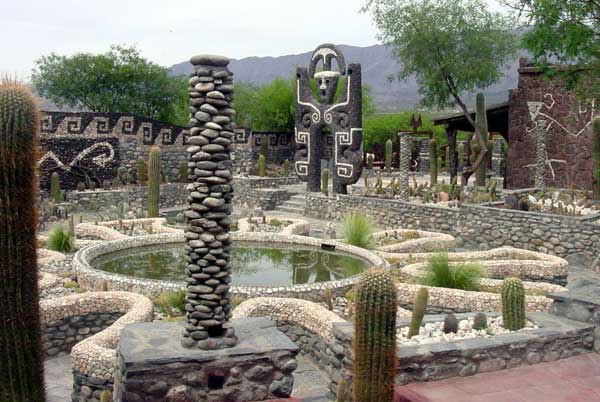
A tribute to the sun and the llama
A day north of Cafayatte I stumbled on this garden and museum. It seems to be a tribute to the sun and moon and honors the llama.
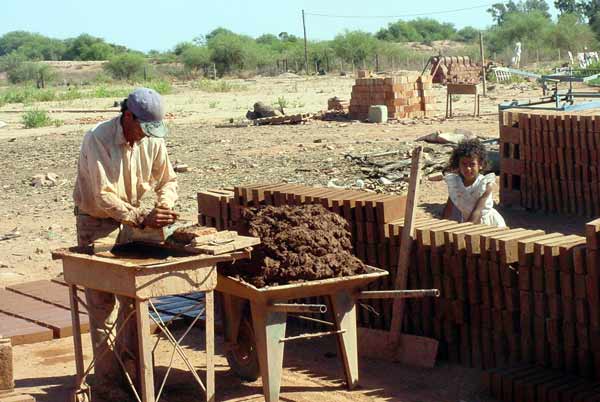
A brick factory
Hand molded, sun dried bricks, made out of local clay.
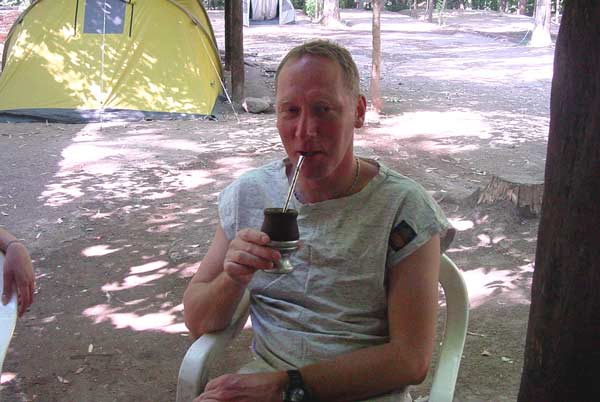
Matte
It's tea, but you drink it through a metal straw. Since you share the cup with others it's a social thing.
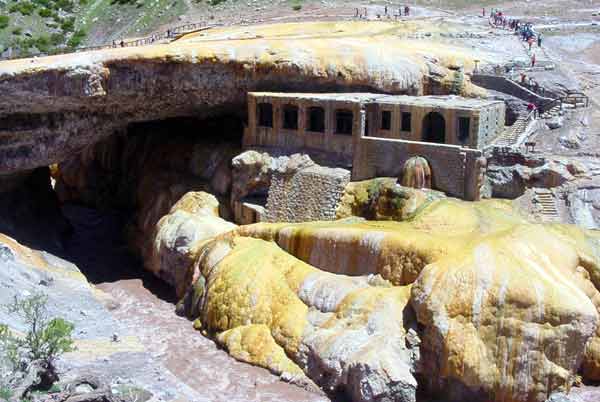
Puente del Inca
It has nothing to do with Incas. It's a hot-spring resort that was the victim of a avalanche some 70 years ago. After the snow and ice had melted and most of the debris had washed away this 'bridge' was left over, covered with minerals from the hot spring which is still pumping out crystal clear bubbly water.

Vineyards of the Andes
Just the sight of snowy mountains towering over the grapevines makes this Argentinean wine special. The bonus is: It is very drinkable, especially the sparkling wines which we call champagne.

Empanadas from the wood stove
One of Argentina's treats are empanada's. Sachets of dhow, filled with all kind of goodies, preferably baked in a traditional clay wood stove.
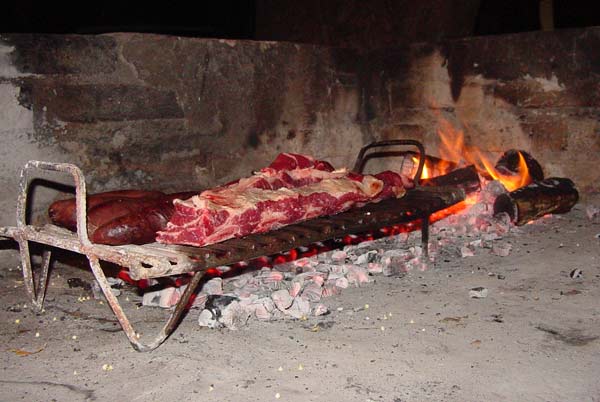
Famous Argentina steak
There is only one thing better than empanadas and that is a genuine Argentina steak. Usually this is enjoyed with some friends during "asado" (bbq).
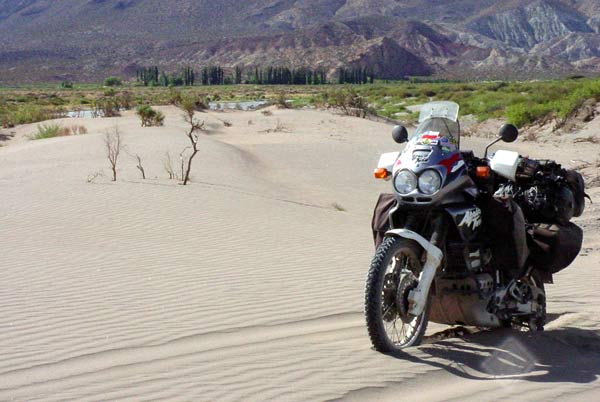
Ruta 40 has some surprises
One minute you ride on smooth asphalt, and the next minute your stuck in soft sand. It's all there on ruta 40.
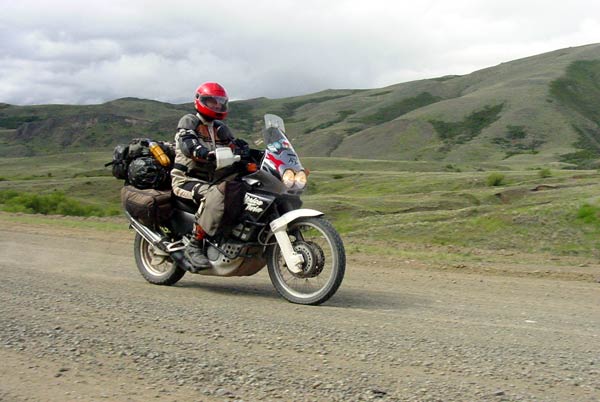
Ruta 40
And so it goes on, hour after hour. Small villages pas by and everywhere people are friendly.
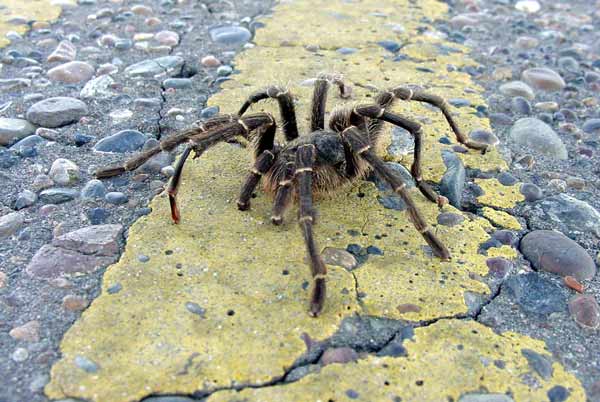
Pedestrian
Riding your bike with 90 Km/h and your eyes tell your brain a spider crosses the road. Your brain replies to your eyes: "Don't be silly, you could never see that with this speed", but your eyes say: "I did, I did". I stopped and turned around and I could see it from a 30 meter distance. Did you ever measure how wide the yellow line on the road is?
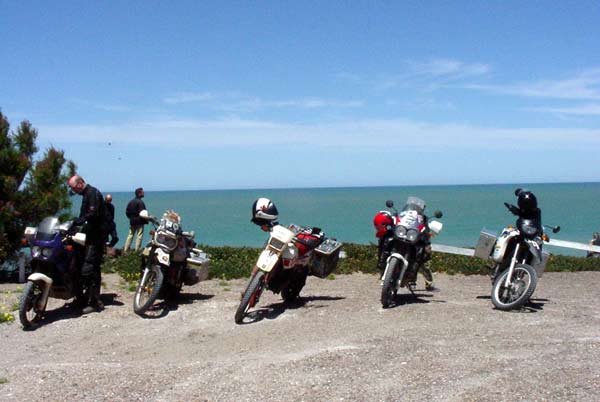
A collection of travel bikes
Every year, around December, there is a meeting of bike-travelers in Viedma. It is a great place to meet other travelers and local bikers.
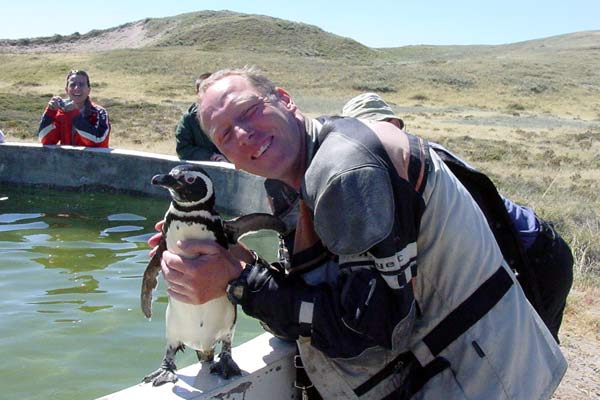
Did you hug a penguin today?
The coast of Argentina is a breathing ground for the Magellan penguin. Hundreds of thousands of these little well dressed men are stumbling around the place.
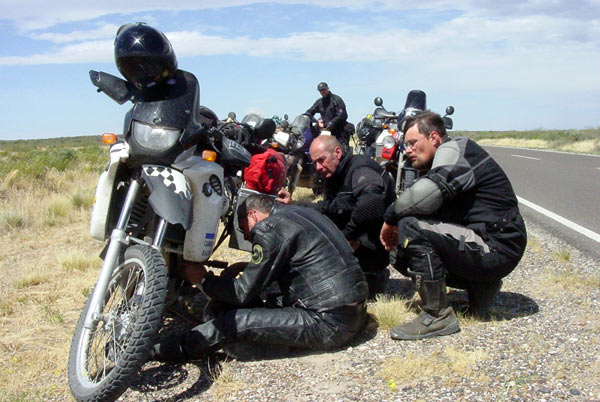
Need a hand?
In a small group we traveled south. And the more bikes you put together, the more chance one of them breaks down. Luckily (?) there also are lots of experienced opinions available.
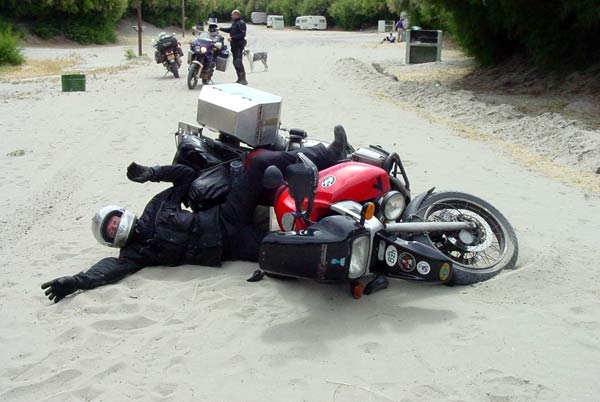
Taking a rest
Mick was not (yet) accustomed to riding soft sand with his very heavy GS 1300. As a result he spend a lot of time lying down.
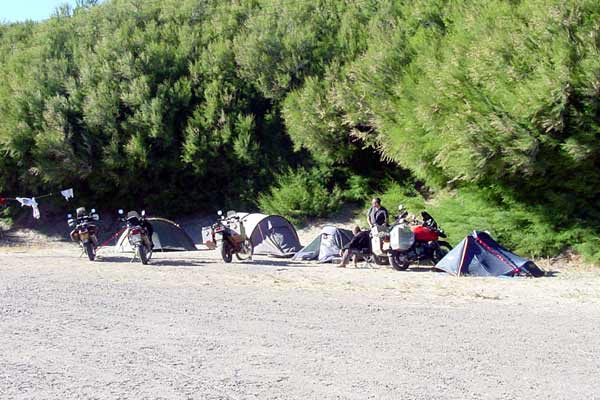
Camp on peninsula Valdez
The bigger the group, the more difficult it is to find good campsites. If you look carefully you'll notice the tent-decorations for Christmas.

Rude animals on peninsula Valdez
Peninsula Valdez is a true wildlife refuge. All sort of unusual animals can be seen there, from Orcas to Armadillos and many in-between. I even saw animals that don't have a name yet.
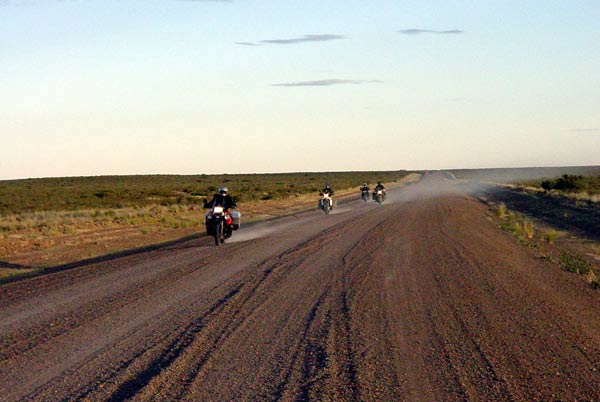
Small caravan
Always traveling south we became a small caravan.
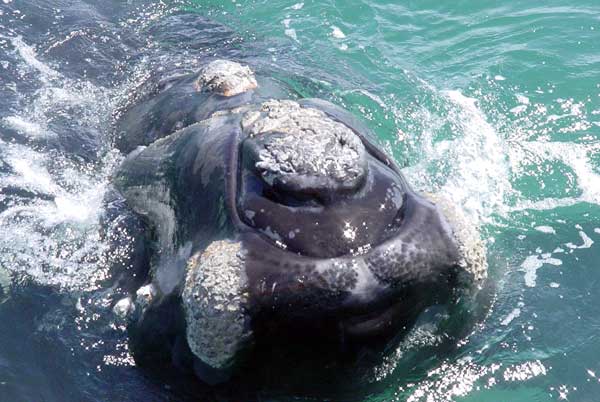
Sticking your nose into it
Whales are curious creatures. Luckily they are also gentile and careful. This 'Southern Wright Whale' could easily tip over our (rather small) boat, but no matter how close she came, she never touched it.
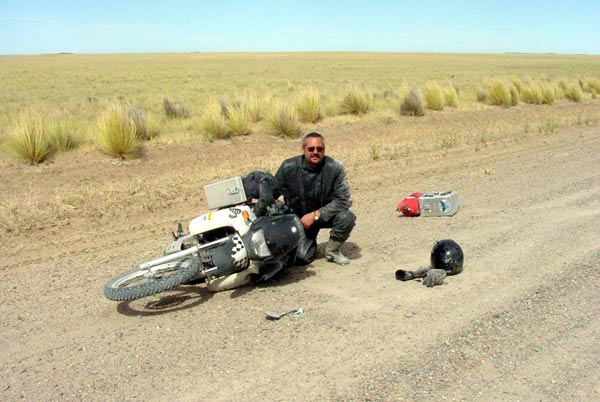
Spread out your bike
Bob discovered that sliding down a dirt-road with 80 Km/h is not a good idea. Parts of your bike take a different route home.
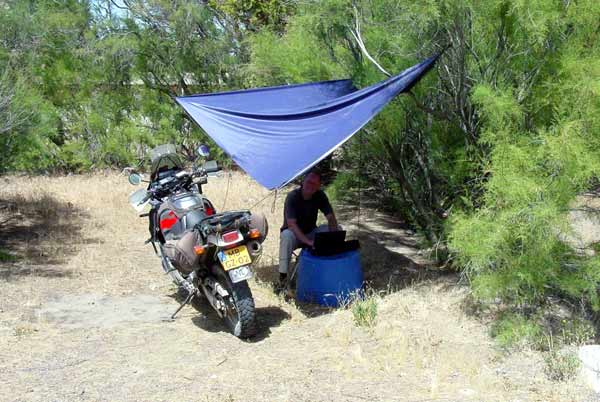
Step into my office
Preparing for a slideshow on a borrowed laptop, fed by Pam's battery.
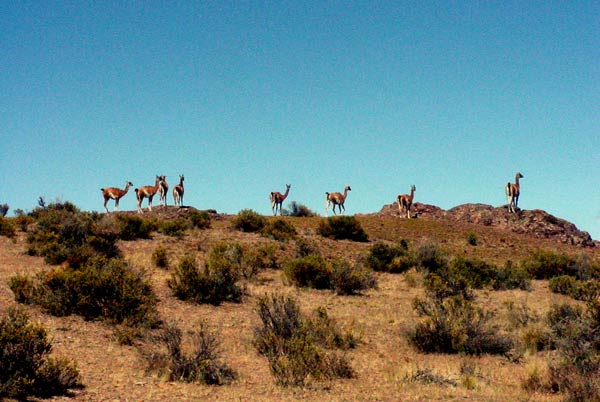
Guanacos
Another member of the rather extensive llama-family (actually it is the camel family), the guanaco. They live in the coastal region.
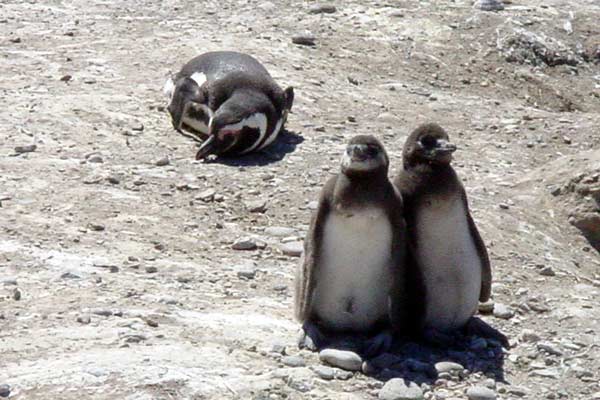
The Marx brothers
Young Magellan penguins. You can watch these funny animals for hours.
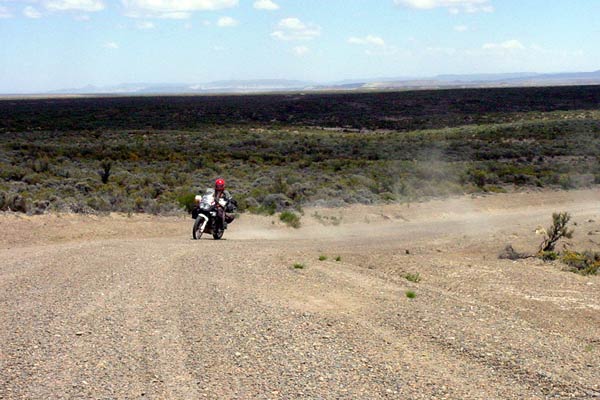
Patagonia roads
Patagonia is mostly flat. Flatter then a pancake. The only 'hills' are flood-beds that cross the land east to west (away from the Andes). By the look of them it must rain cats, dogs and elephants here.
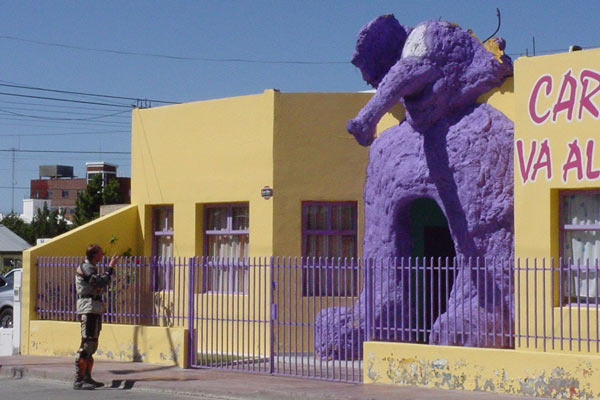
Lariam or reality?
For months everybody who did not study medicine, told me that the anti-malaria-drug 'Lariam' I was taking was worse than the malaria it prevented. (A stupid thing to say if your not a doctor.) I always replied that I had no psychosis or hallucination of any kind except the regular visits of my friend Hugo, a invisible purple elephant that sings opera. Finally, in Patagonia, I caught him on photo for all skeptics to see.
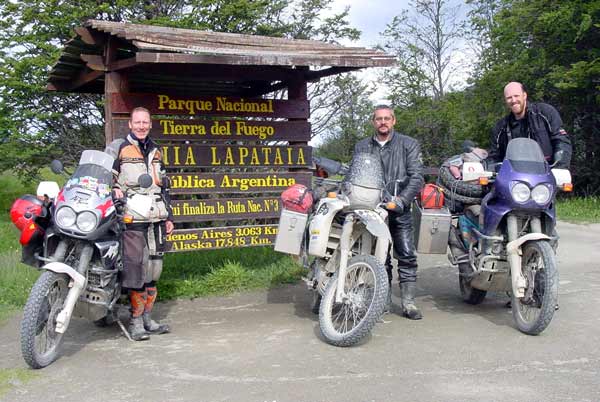
The end of the road
The road ends here. Except by boat, there is no way further south. Now the only way is up.
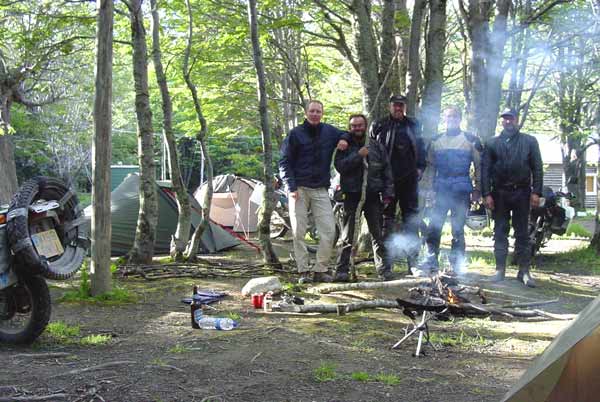
The end of the year
What better place to celebrate the end of the year then the end of the world. A group of some 20 motorbike travelers came together.
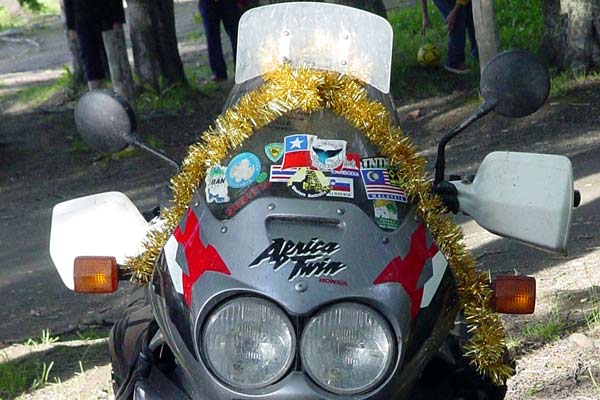
Christmas spirit
Pam to was in a Christmas spirit.
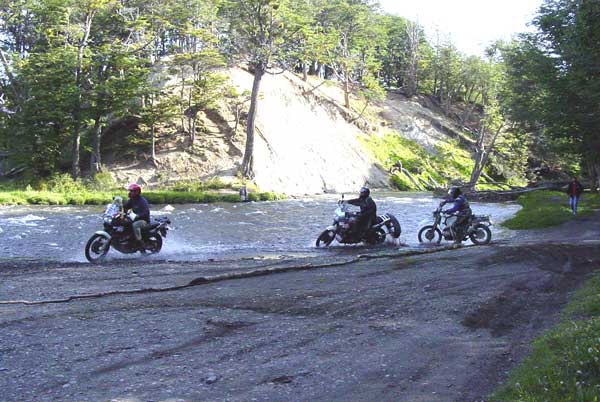
Fin del mundo cross
Since we were all bikers we organized the 'Fin del Mundo Cross'. A combination of trial and speedway on big travel bikes.
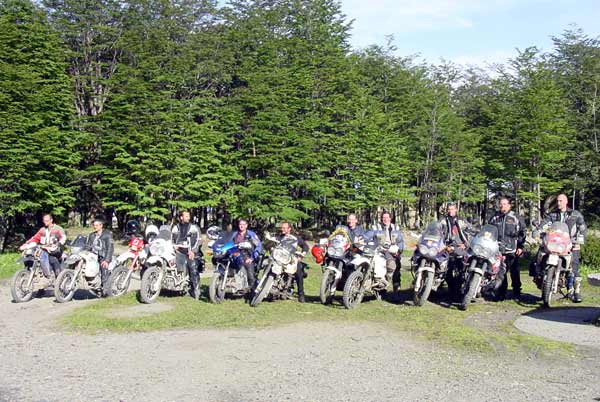
Fin del mundo cross
The honorary photo of the 'Fin del Mundo Cross' contenders. Who won (Jorg) is not important. The fact that we were there is all that mattered.
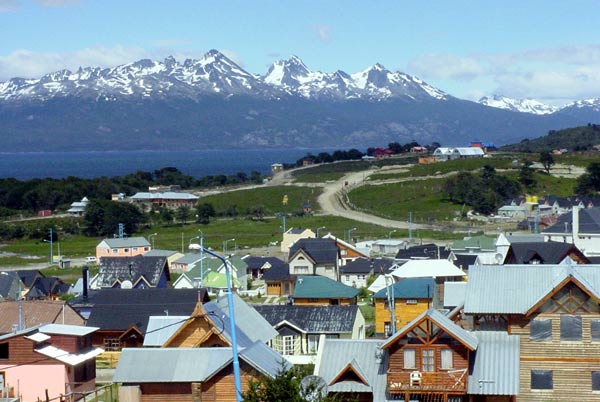
Ushuaia, town at the end of the world
The town of Ushuaia is visited by thousands of cruise-ship passengers a year and a hand full of motor bikers. It's situated on the Beagle channel where the oceans meet.
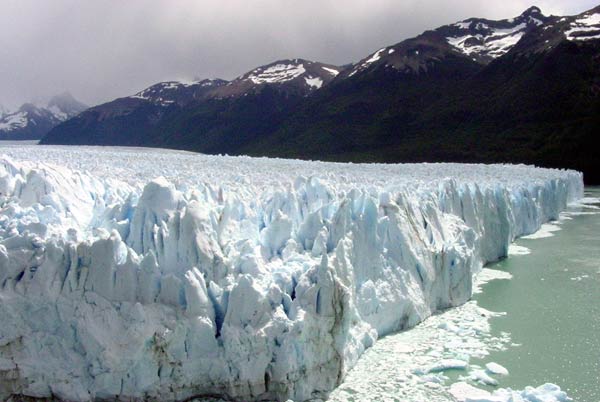
Perito Moreno, wall of ice
The 5 km wide and 70 meters high wall of ice that is the front of the Perito Moreno glacier. This 20 km long ice-cube displays awesome powers when chips break of and cause tidal waves.
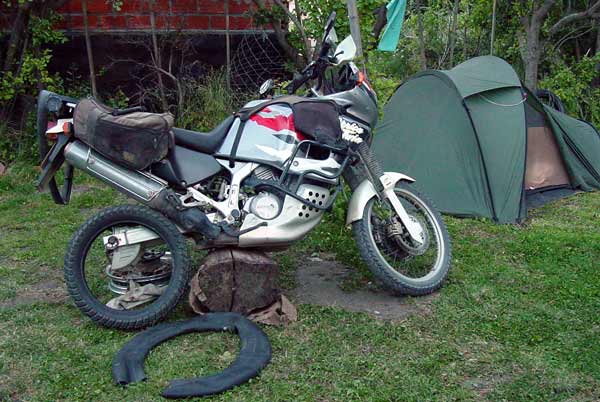
Blowout in a blizzard
A serious blowout never just happens. It always happens when you really don't need it (if that is ever the case). It happened to me during one of the famous Patagonian dust storms. The tire was beyond repair and I had to hitch a ride back with Pam in a dump truck.
Chile
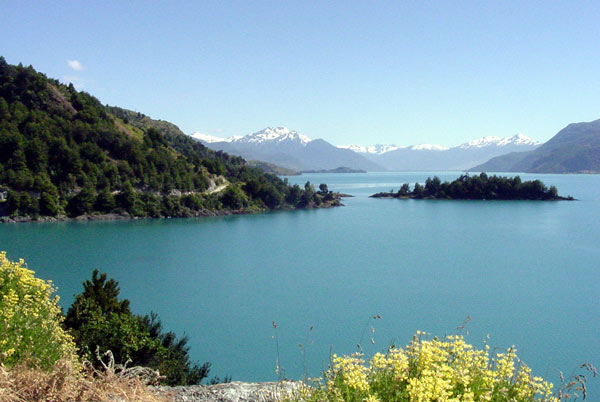
Carretera Austral
The caretera Austral coils around snow capped mountains and blue green lakes in the rugged south of Chile.
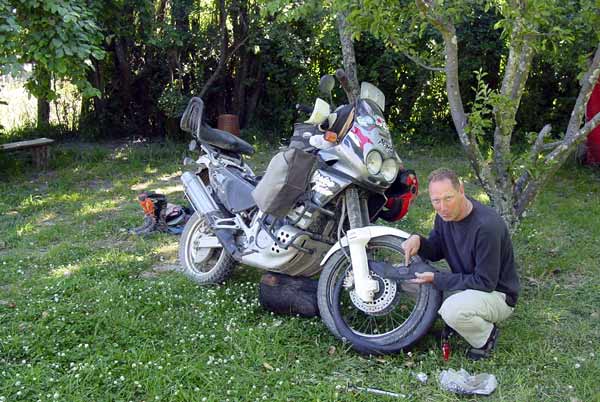
Flat front
I am lucky when it comes to flat tires. First of all, I did not have al lot of them and second, they mostly happened at convenient times and places. Here in porto tranquilo on the caretera Austral I discovered the flat front while having breakfast.
Argentina
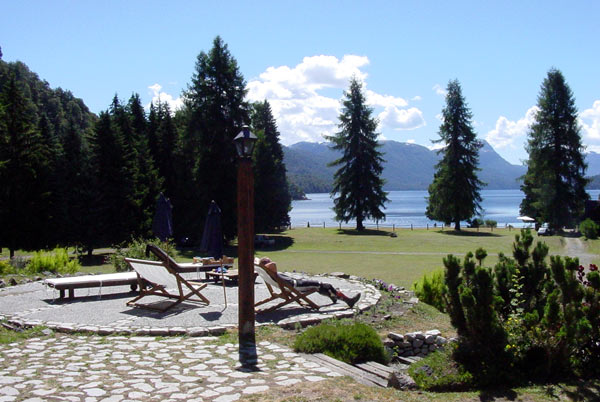
Route of the seven lakes
After the caretera Austral another route curls around shiny lakes and beautiful laces to chill out. The Route of the seven lakes.
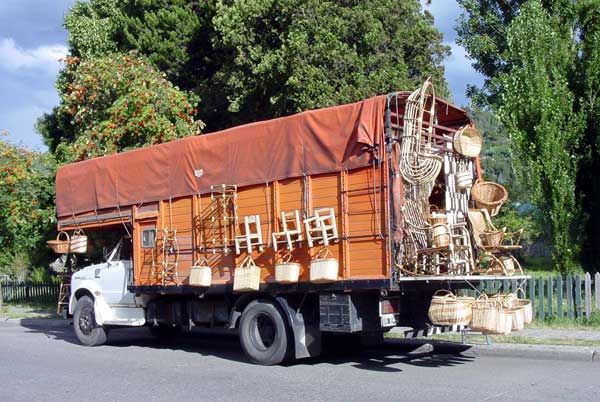
Furniture truck
Loaded to the top and then some more. It mist be interesting to see this truck drive on a highway.
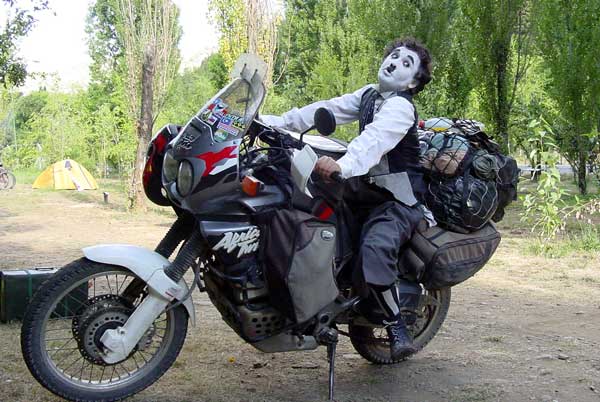
Bike robber
While relaxing in San Martine de los Andes, a strange guy tried to ride of with Pam.
Chile
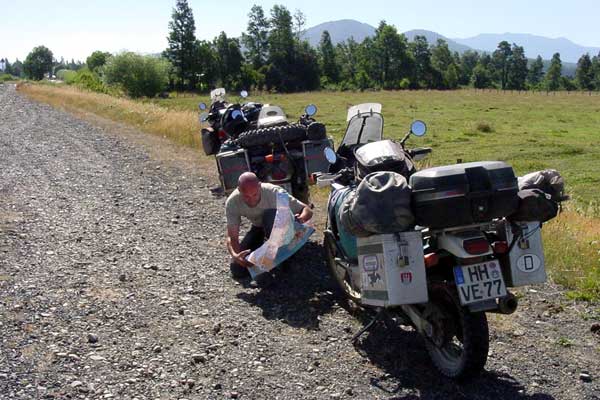
The road to...
Most of the time it's not all that important which road your on, where your going and where your coming from. Your heading north and that is enough. However every now and then you actually want to go to a specific place. In this case, Pucon, Chile.
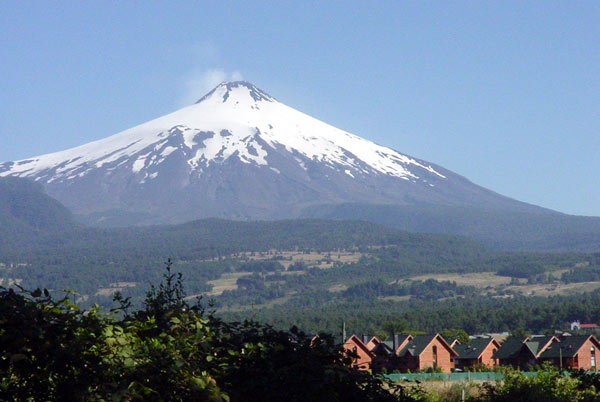
Smoking Villa Rica, Pucon
I always wanted to climb to the top of a smoking volcano and here was my chance. Villa Rica is a steadily smoking and puffing volcano that is relatively easy to climb. I did use the word relatively deliberate since it still is a one day climb to almost 3,000 meters on a snow-capped mountain.
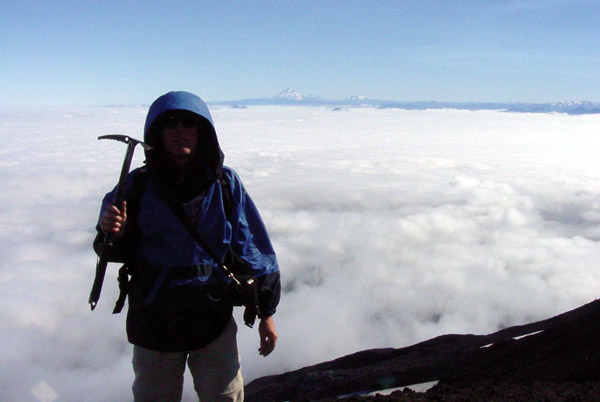
Above the clouds
Not even halfway up and a long way above the clouds. The sun is burning but the air is freezing. A difficult combination to cope with.
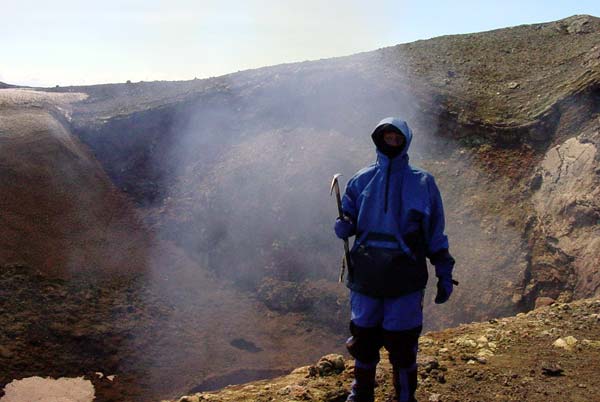
Bad breath
After hours of exhausting climbing I made it to the crater. I could look into the belly of the planet and it did not look good. Boiling molten rock, fountains of lava and poisonous gasses. Not a place you would want to be.
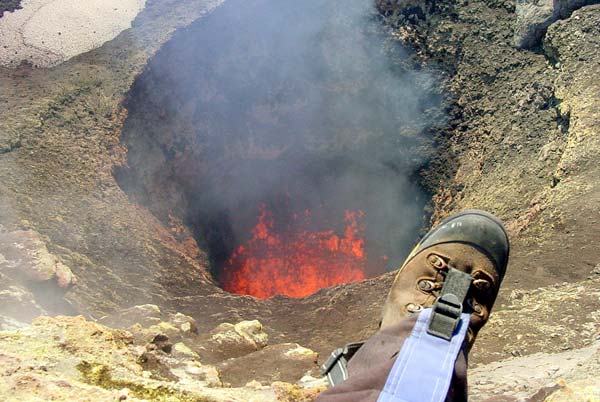
The boiler of the world
Sitting on the edge is good the get your ass warmed up again, but the heat smashes into your face with a fountain of lava from time to time. Yes, that is my shoe and my foot is in it.
Argentina
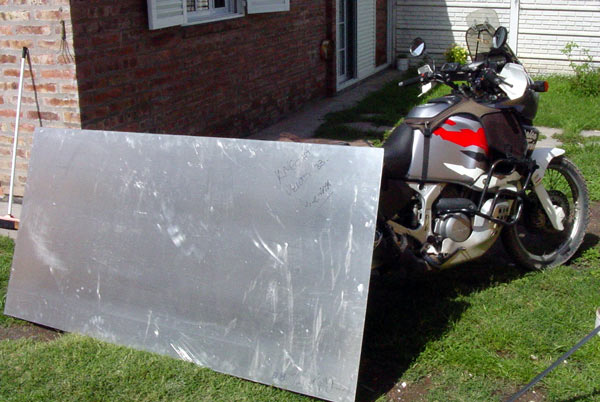
New purse for Pam
My soft side bags were getting 'bad' after two yeas of abuse. Back in Viedma, Argentina I designed a set of panniers that me and some friends made together.
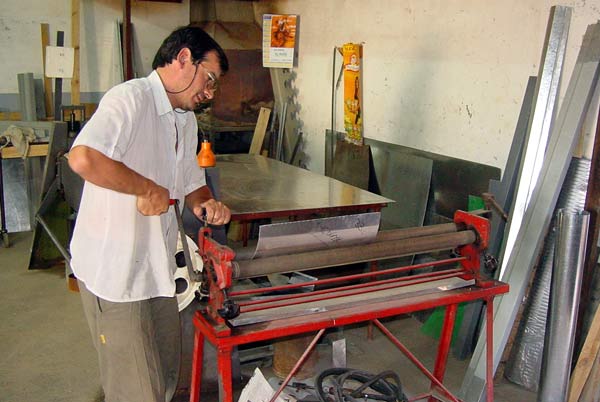
New purse for Pam
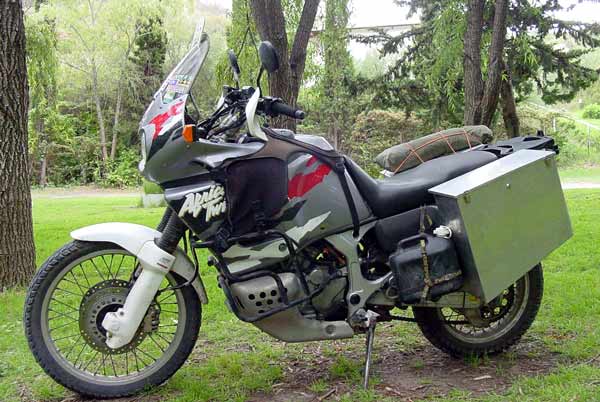
Oscar Knecht arranged it all. His neighbor Cristian Lang welded a extremely strong luggage-rack and Hector Prendes folded and molded the aluminium sheet into a set of panniers. All for the price of a bottle of vino tinto. The tig-welding was done by a local welder for around 50 euro which is a very good deal considering the many meters of seam.
New purse for Pam
The result of this amazing show of teamwork is the 'super slim Africa Twin'. The panniers are not wider than the handlebars.
Dance with an armadillo
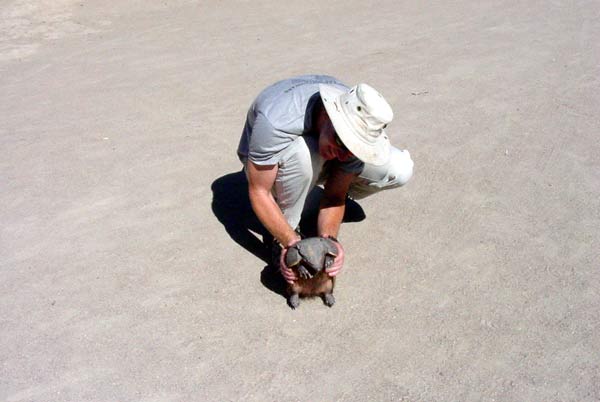
To test my new panniers I visited peninsula Valdez again. I don't think there are worse roads anywhere. This little guy was after my cookies.
Azul, home of 'La posta'
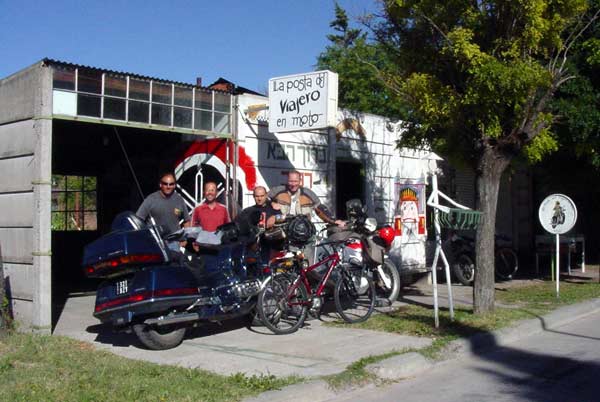
Jorge likes bikes and even more, he likes travel on big bikes. Unfortunately for him, he does not posses the financial means to do so. Therefore he does the second best thing. He opens up his home for bike travelers. It does not matter where you come from and what bike you ride (even a pushbike is fine), as long as you are a traveler you are welcome.
La Boca, Buenos Aires
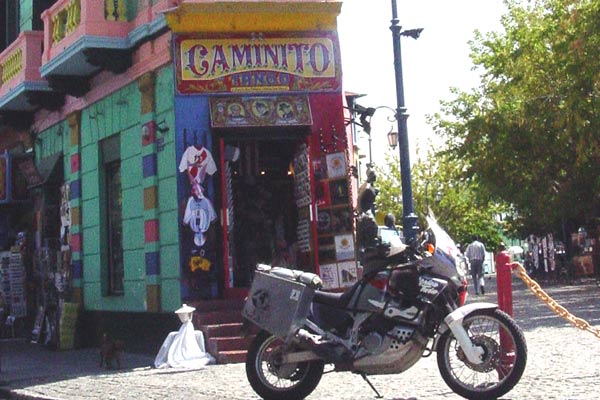
The birthplace of the tango. In the early days this area was so poor that the inhabitants, mostly painters, used their paint-remains to paint their houses which in time led to an extremely colorful neighborhood.
Uruguay
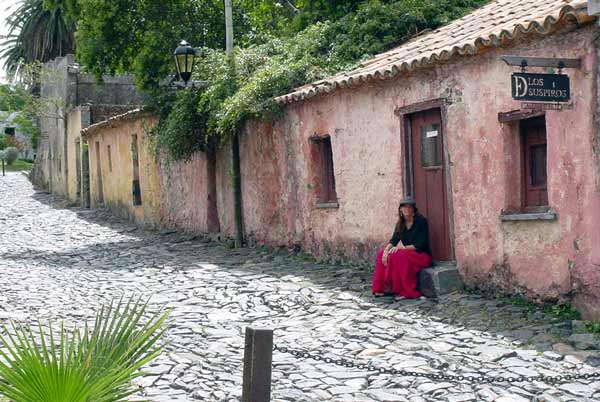
Colonia del sacremento
Uruguay has definitely held on to it's colonial character. In Colonia you can dwell through the old city, dine in a 1920 Rolls Roys and drive around in a 1930 Bugati. It's a time trip
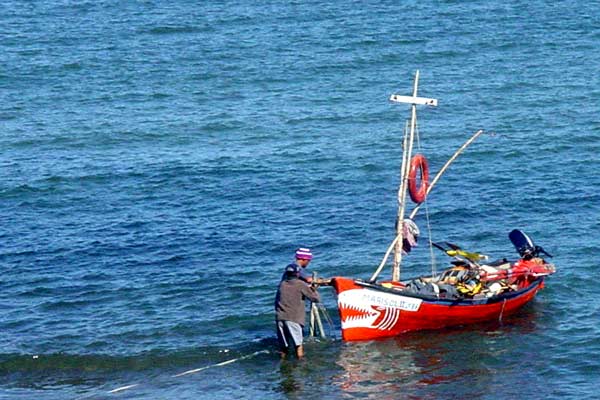
Punta del Este
Only a few hundred meters away from the high-rise coastal development of Punta del Este you can find old fishing villages with colorful boats
Brazil
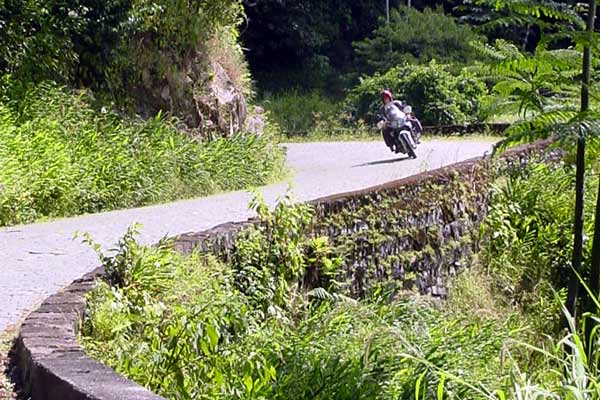
Curvy mountain roads
Brazil has some of the finest motorbike roads in the world. Bikers are also very popular. Often people stop to chat and to invite you for lunch, dinner or to stay in their home. If only the language was a bit easier to understand
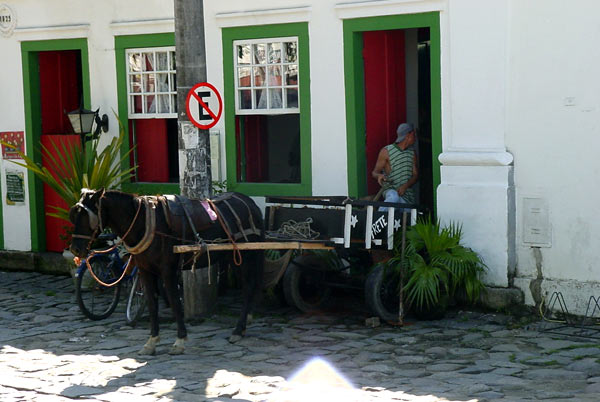
Paraty parking regulations
In Paraty, Brazil, there is some weird parking behavior.
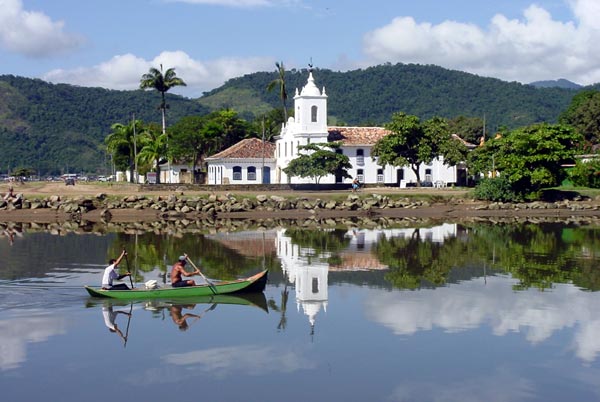
Paraty pirate resort
Beautiful Paraty. A colonial town with streets that flood during high tide.
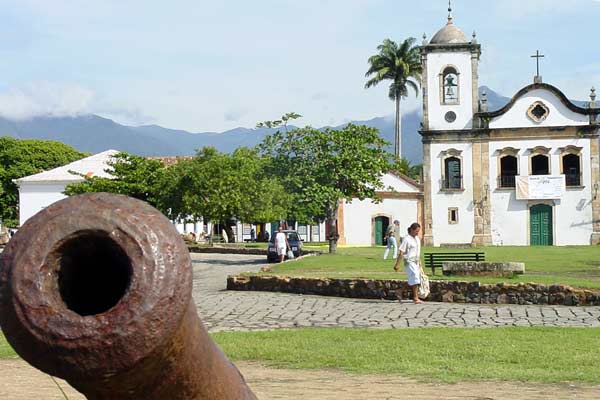
Paraty pirate resort
Beautiful Paraty. A colonial town with streets that flood during high tide.
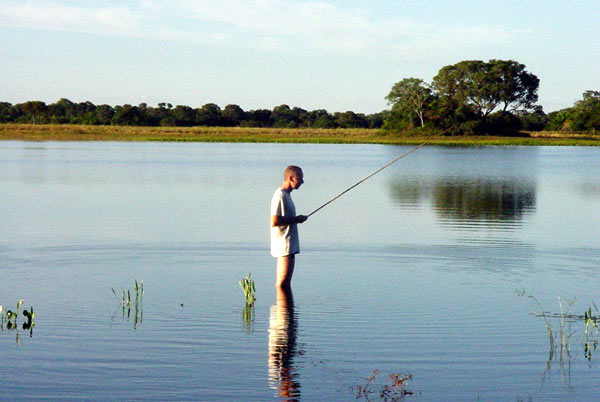
Catching piranhas
The Pantanal, Brazil. One of the largest wetland areas in the world. The basins are filled with caiman crocodiles and piranhas. Both of which have a reputation they do not deserve. That is: Most piranha species are vegetarians and caimans don't eat people.
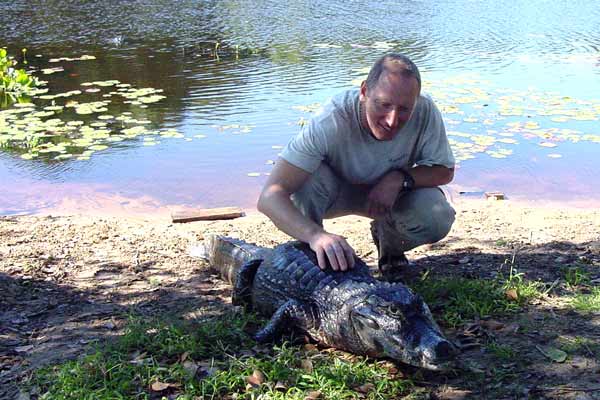
Catching caimans
Caimans are not territorial or aggressive. What's more, they don't consider humans to be on their menu. Still, you need to be careful for they do have a nasty row of sharp pointy teeth.
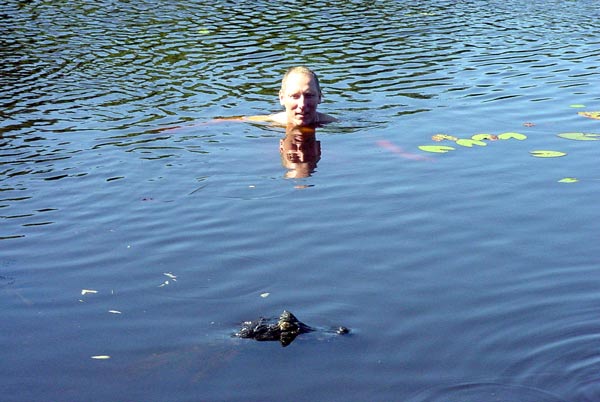
Caiman pool
Caimans are not territorial or aggressive. What's more, they don't consider humans to be on their menu. Still, you need to be careful for they do have a nasty row of sharp pointy teeth.
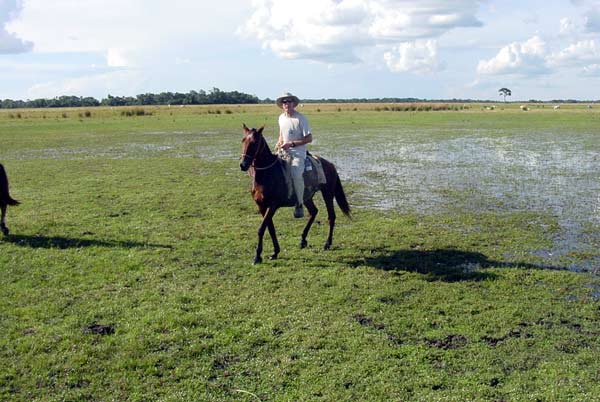
A change of transport
The best way to enjoy the Pantanal. It's just too big to walk and to muddy to ride a heavy bike.
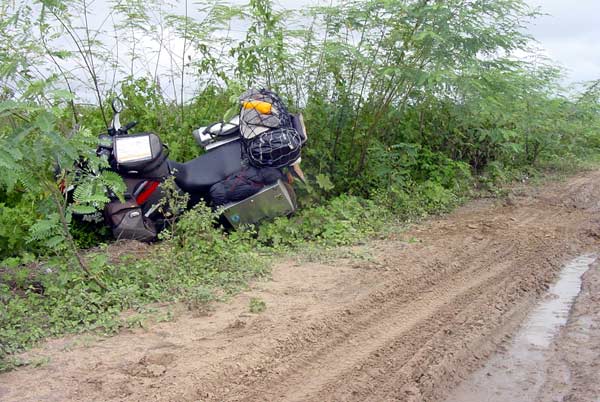
Oops
As I said before, the Pantanal is to muddy to ride a fully loaded Africa Twin. It took me one hour, millions of liters of sweat and a thousand mosquito-bites to get out of there.
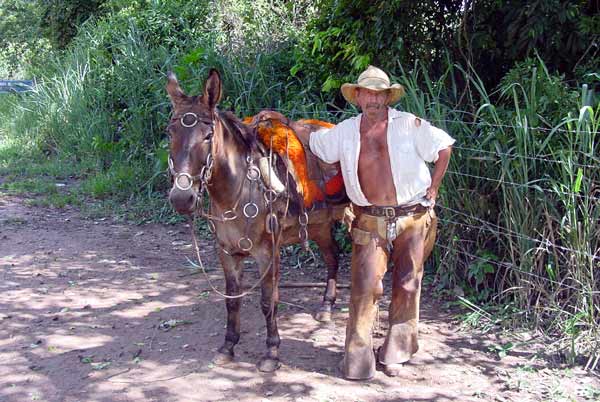
Caballero
In Brazil cowboys, caballeros, don't mess around with vulnerable horses. Nothing beats a mule they say.
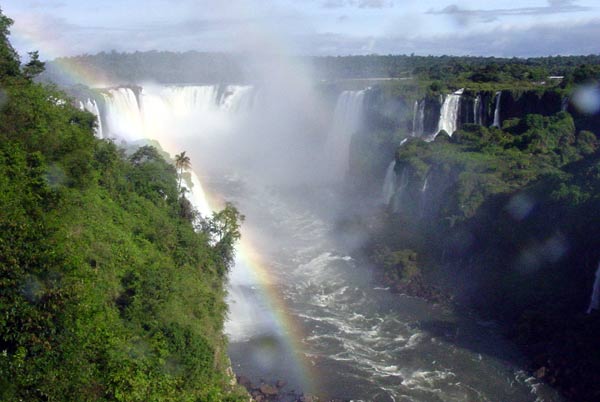
Iguaçu falls
The largest waterfalls in the world. Four times bigger than Niagara falls. 14,000 cubic meters of water thunders down every second. That is 14 million kilo's per second. Imaging that for a shower. It would surely mess up your hair.
Paraguay
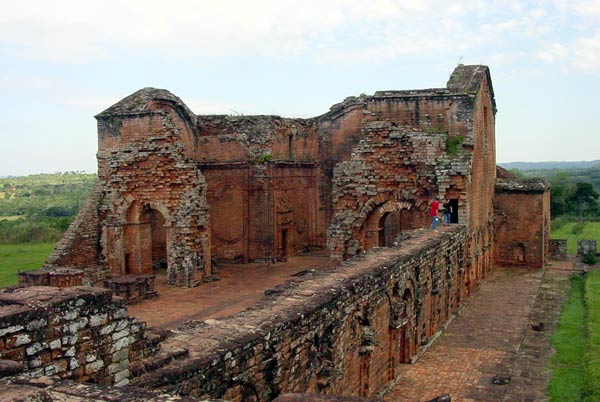
Jesuit missions
Parts of Argentina and Paraguay were colonized by Jesuits. They did so well that the Spanish became jealous and killed them all. All that is left now are the ruins of the missions and they are still impressive.
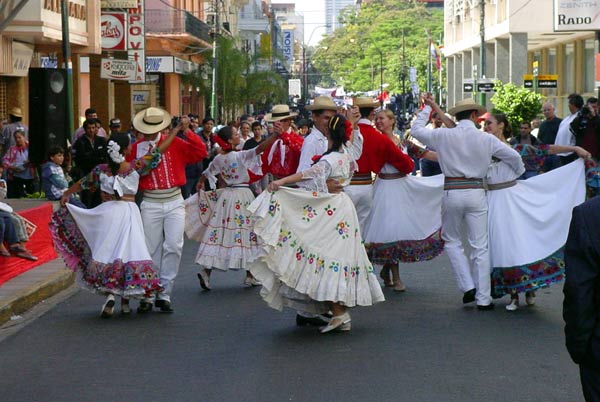
Dancing in the street
Asunction, capital of Paraguay, hosts many small festivals. Mostly folklore dancing in the streets.
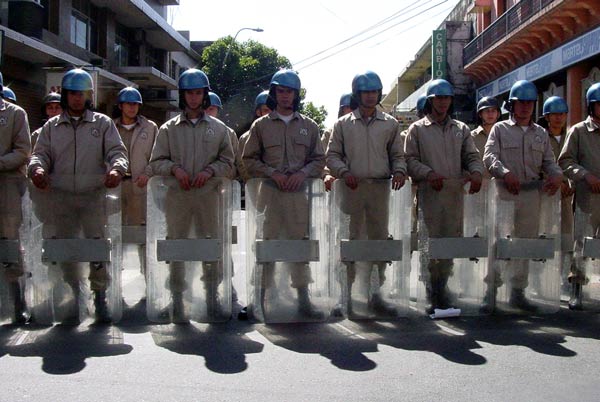
Different type of folklore
I am not sure why, but many of these guys blocked the streets. Maybe they did not like my hair?
The axis of power
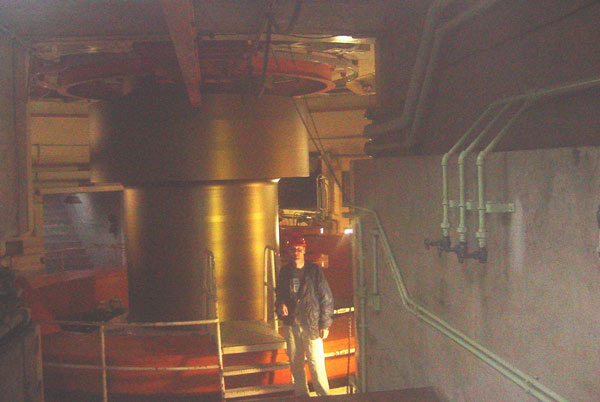
Itapui has build the largest hydro-electric plant in the world. It produces 80 % of the electricity needed for the whole of Paraguay and 25 % of that of Brazil. I visited the dam and got a special tour into it's bowls. Here I am standing next to one of the 18 axles that connect the turbine below me with the generator above me. This 1,5 meter thick axle is solid and rotates at 90 rpm transferring 750 Mw. This equals 1,200,000 horsepower. That is 20,000 Africa Twins full throttle. And they have 18 of these.
750 megawatt generator
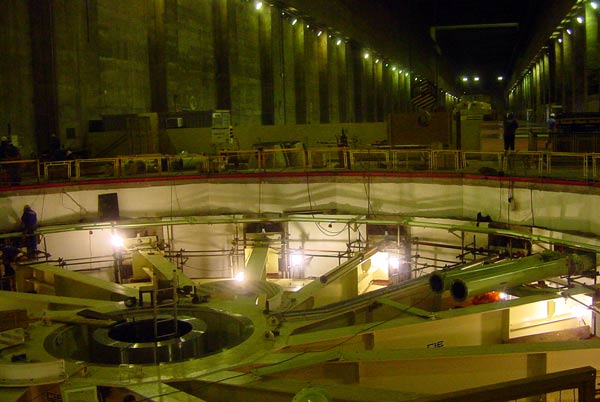
This entire inside (16 meter) spins around at 90 rpm when the generator is 'switched on'. This hall (the powerhouse) is almost 1 Km long and the ceiling is over 100 meter high. It contains the 18 generators.
Paraguay express
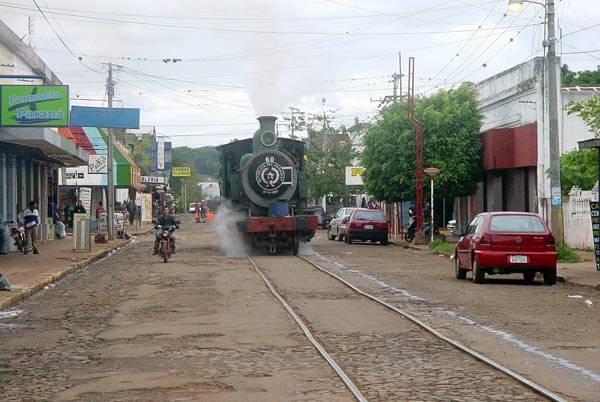
How wonderfully un-complex life can be is demonstrated here.
Chaco road
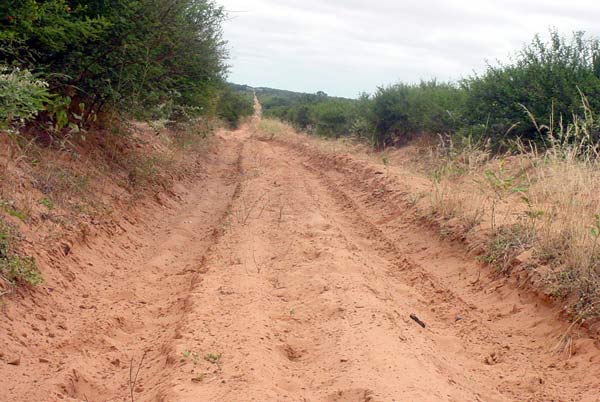
The road from Paraguay to Bolivia crosses the 'Gran Chaco', a large and mostly deserted area in north Paraguay. You can find the story of my crossing in this website with some more photos.
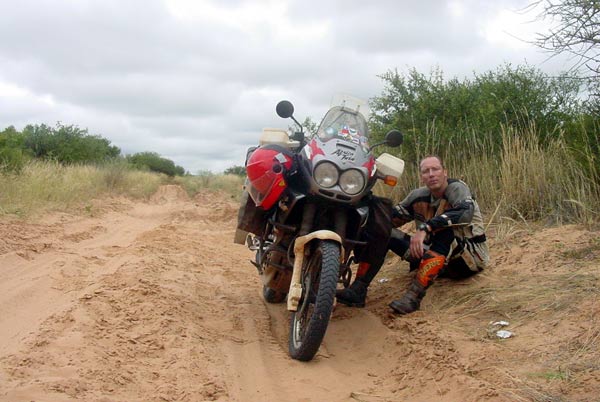
Chaco road
The road from Paraguay to Bolivia crosses the 'Gran Chaco', a large and mostly deserted area in north Paraguay. You can find the story of my crossing in this website with some more photos.
Bolivia
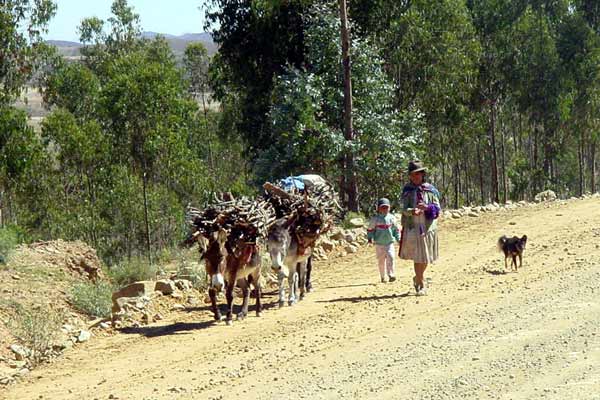
Spinning and walking
Lady collecting firewood and spinning wool while walking.
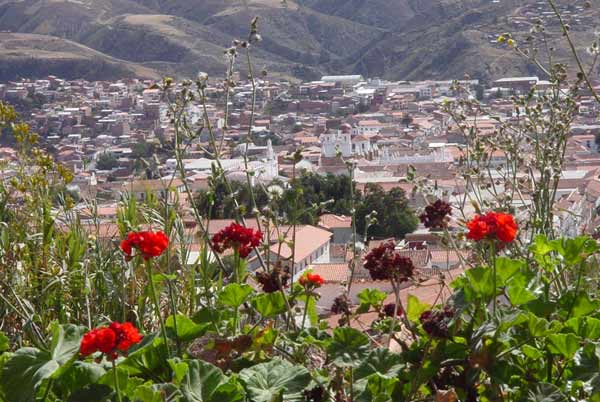
Sucre
Sucre, also called the white city. Very picturesque and a wonderful climate.
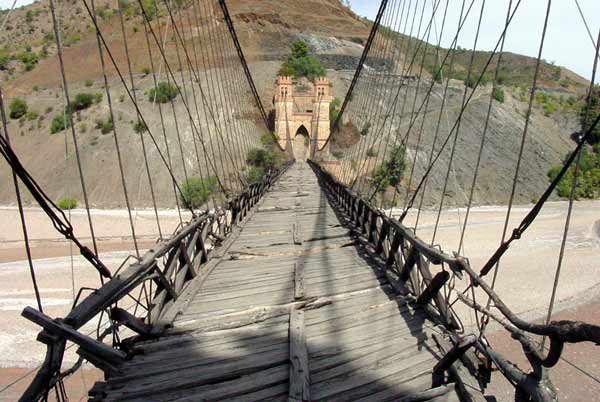
The road to Potosi
Why should you travel on a motorbike? Because in a bus you won't see this bridge, let alone hang out around it.
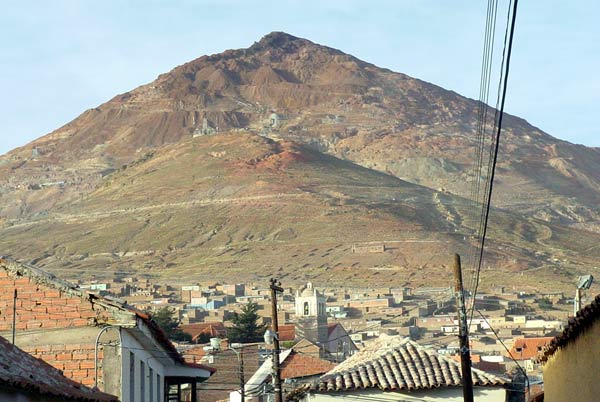
Cerro rico, Potosi
For more than 500 years this mountain has been mined. Every coin of the 'Spanish silver' was made here in Potosi. It has cost the lives of 8 million people and still the mountain is being mined, now mostly for tin.
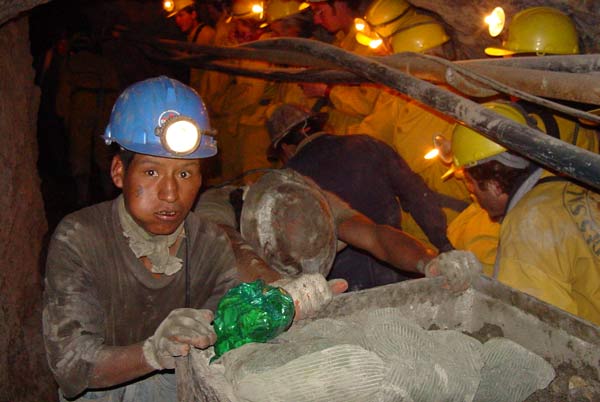
Potosi silvermine
Dressed in old rags with a cloth to filter the air he breaths this Bolivian miner will not live longer than about 30 years. A sad story.
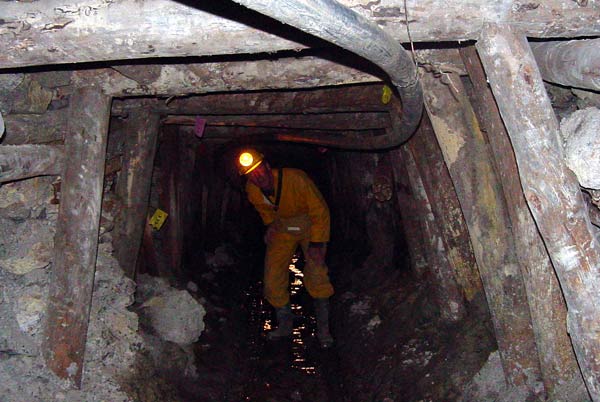
Potosi silver mine
It's hard work. The ceilings are low and the floor is muddy. Obstacles are abundant and trolleys filled with ore come out of nowhere and do not stop for tourists. Two times a leaking air pipe blew out the flame of my head-light. Apart from all that my life has been shortened with a few years due to the siliceous dust in the air. But it was well worth the effort.
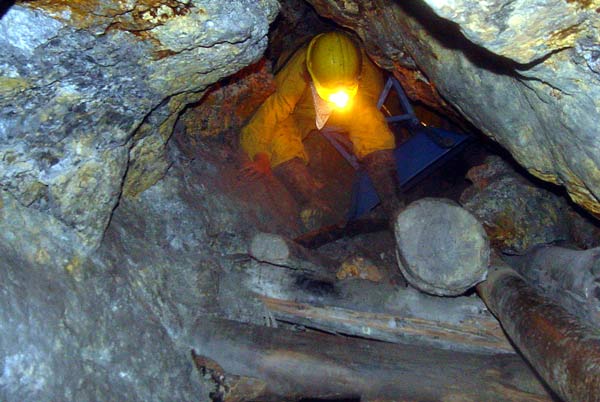
Potosi silver mine
Stuck between a wheelbarrow, some wooden support-studs and the ceiling. At 35 degrees centigrade and hardly any oxygen in the air. It's all in a days work.
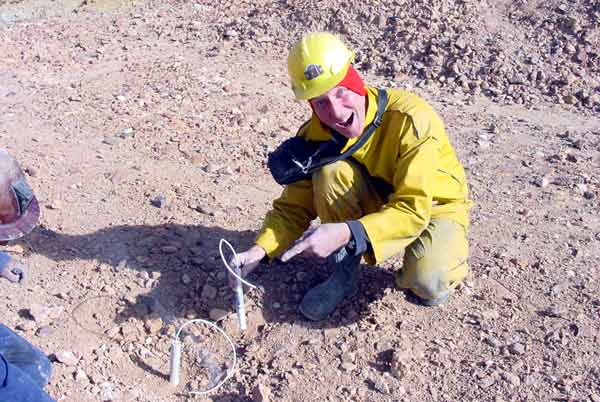
Dynamite
I've always been a sucker for fire-crackers. Now it was time for the big stuff. Dynamite is freely available in the miners-market of Potosi. I just had to blow up something.
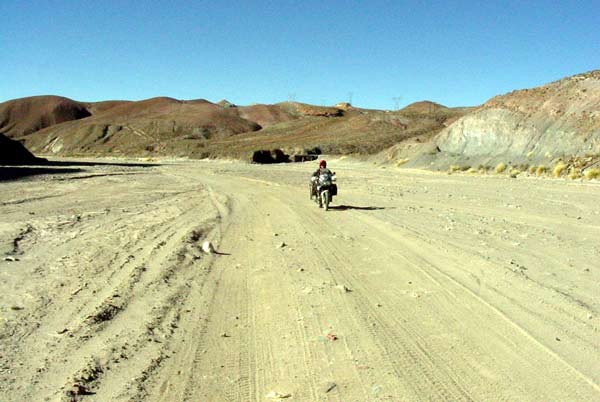
Road (?) to St. Vincent
The road from Tupiza to St. Vincente is 'no more'. Now the dry riverbed takes over that function. It's fine with me as long as it does not start to rain.
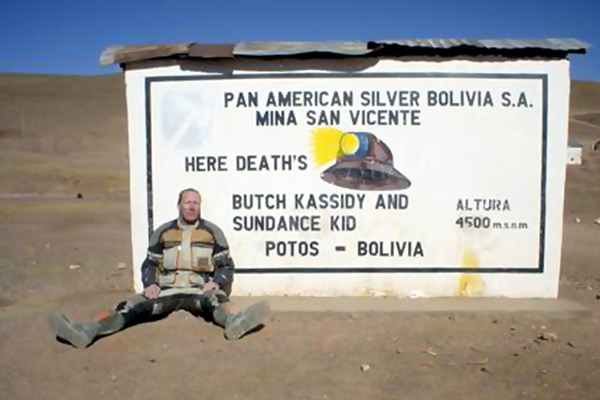
St. Vincent
The town where Butch Cassidy and the Sundance Kid lost their last gun-fight.
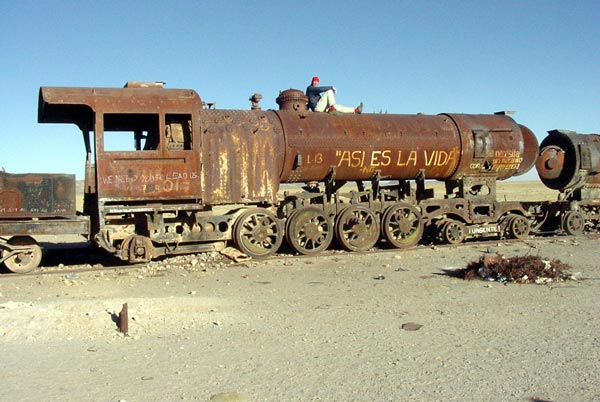
Train graveyard Uyuni
At 3,800meters altitude lies the largest salt lake in the world. Next to it you'll find the train graveyard of Bolivia. Every discarded piece of railway equipment has been ridden out here and left.
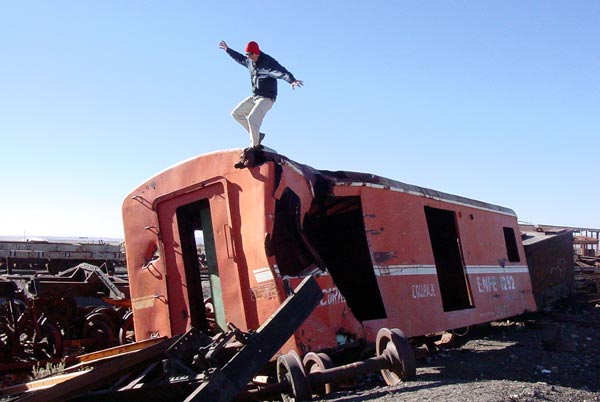
Train surfing
I am lousy at regular surfing, but train-surfing is my thing. At the Uyuni train graveyard it can be done. Safely.
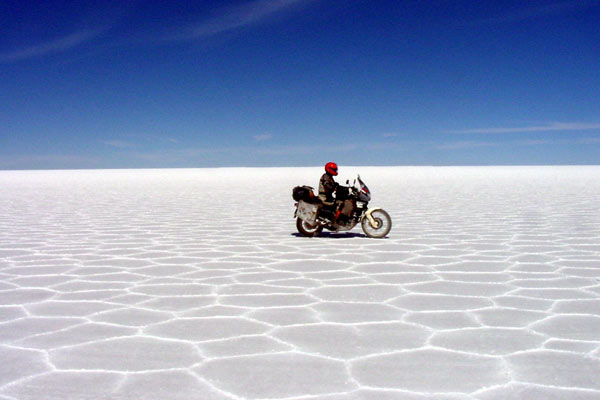
Salar de Uyuni
It is the largest salt lake in the world with a 150 by 100 Km. It is a good idea to at least bring a compass when you go out there as there are no visible landmarks what so ever.

Sunset at the salar
No colors, no shades of orange and red. Only the shades get longer and longer until they go all the way to the other horizon. Then it is dark. The crystallized hexagons create dramatic patterns though. It's fascinating how salt always creates this shape.
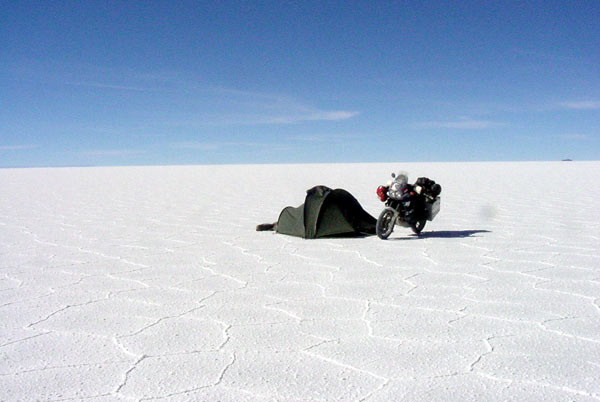
A good spot to camp
Now, what would be a good spot to camp here? It all looks the same to me.
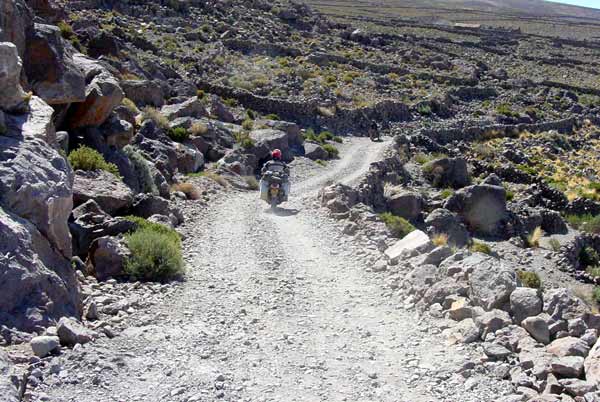
Bolivian highway
After crossing the salar de Uyuni things get a little fuzzy, route wise that is. Towns without names, roads that seem to go no where. It's a puzzle.
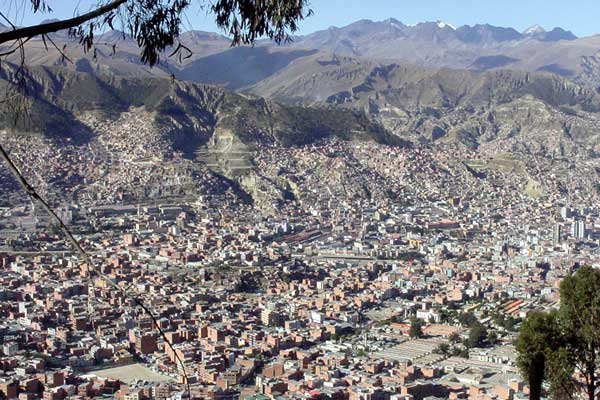
La Paz
It is the highest capital in the world (although Sucre is the real capital) and it's build in a canyon. The downside is that when ever you walk, you either go uphill or down hill and that wears you out at this altitude.
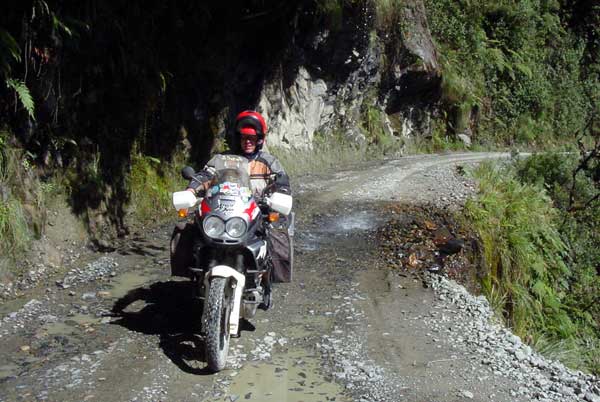
The most dangerous road in the world
Officially the road from la Paz to Coroico is the most dangerous road in the world. Not because of the road itself, but mostly due to the steep and deep drop that lies just next to it. That and the many curves create a challenge for the average Bolivian bus or truck driver.
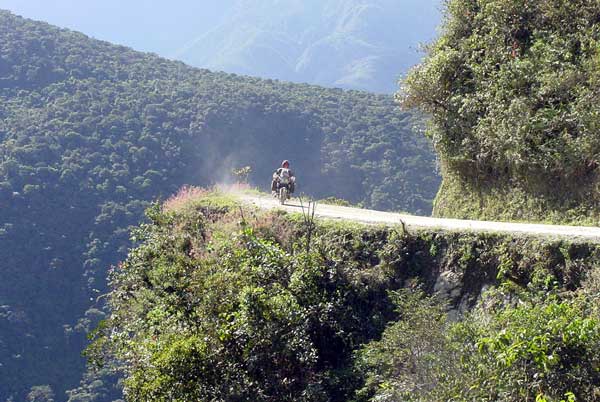
The most dangerous road in the world
One of the curves that have seen many busses, filled with people, go over the edge to crash down in the jungle a few hundred meters below. This mostly happens when unexpectedly another car of truck comes from the opposite direction. There is no space for both of them, and they are going to fast to stop.
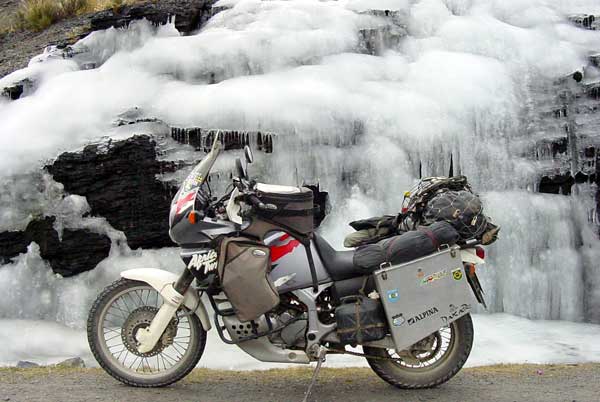
Bolivia can be chilly
Where ever you go in Bolivia, if you go somewhere else chances are you need to cross some mountains. And that is pretty cold as you can see.
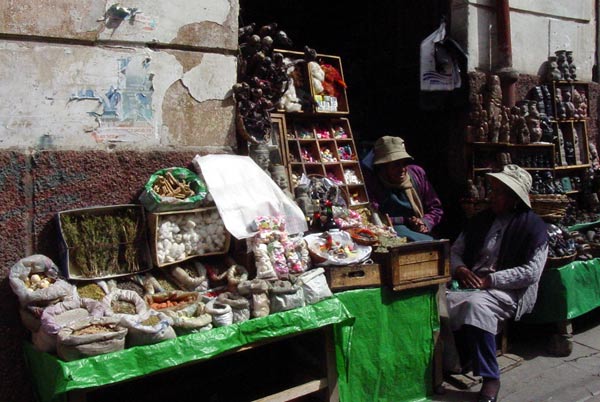
The witch market
It is called the witch market because you can buy al sorts of weird things. Mostly it caters for tourists, but the occasional local witch comes by to buy some ingredients for a potion. How about llama embryos for luck or dried bones or unknown herbs?.
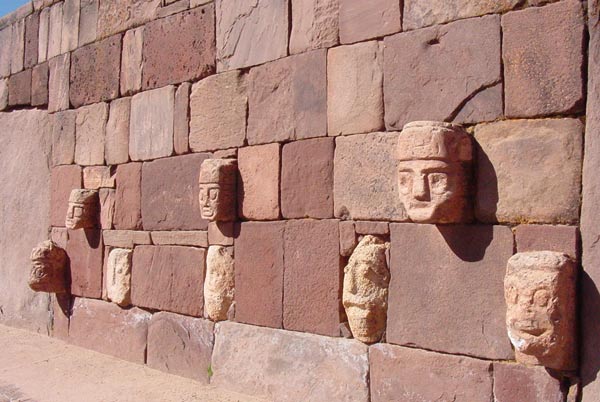
Tiahuanaco
This pre-Inca civilization ruled southern Peru, northern Chile and a large part of Bolivia. Famous is the 'sun gate' and this 'sunken courtyard'. According to Erich von Danicken it was a city created by aliens and Broznansky believed the city to be 17,000 years old, but more likely is that the Aymara ancestors build this city around 400 BC.
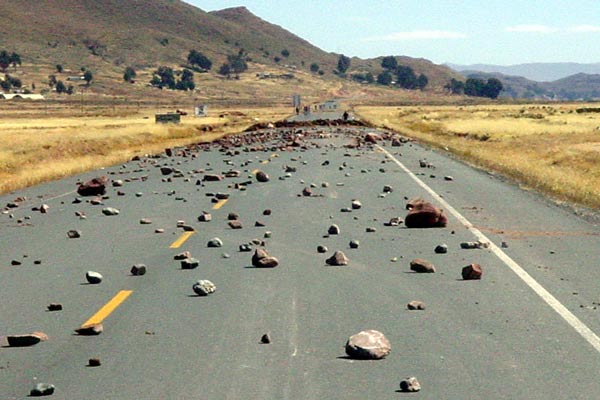
The great escape
Bolivia was as hard to leave as it was to enter. Due to political actions I had to negotiate over 20 major roadblocks between the Capital La Paz and the Peruvian border. At one roadblock I had to earn my passage by shoveling dirt to make the blockade higher. When I finally reached the border it was closed since no one was expected to reach it anyway. I crossed a pedestrian border with Pam much to the amusement and amazement of the border guards who had no idea what to do with Pam.
Peru
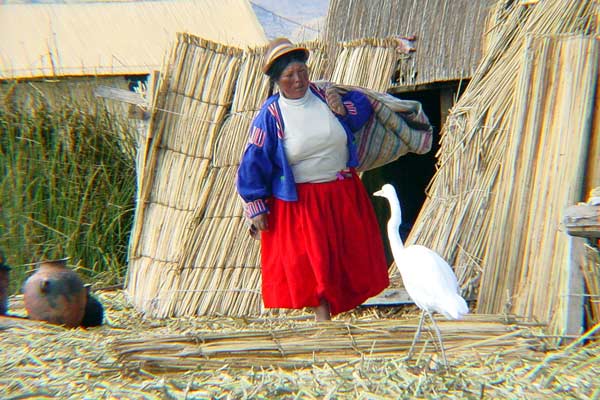
Floating island
It is intriguing how an entire village can float around on a huge lake. The Uros islands are made of riet and the inhabitants spend most of their life there. A few of the island are open for visitors, but mostly the floating people stay prefer to stay isolated.
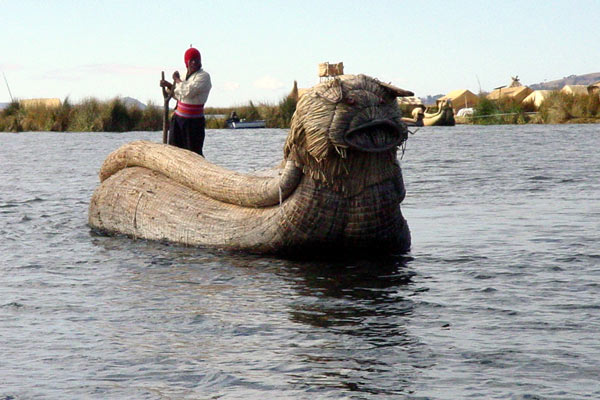
Floating island
The standard mode of transport.
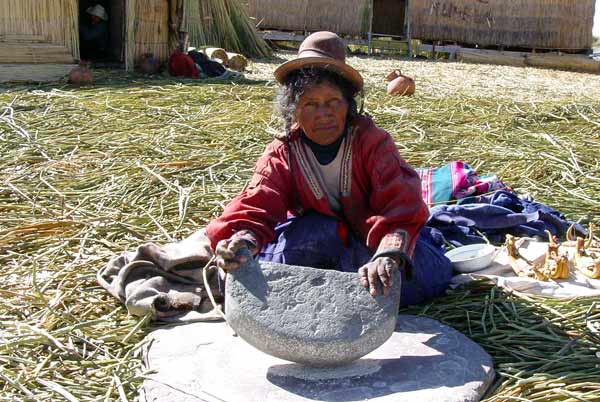
Floating island
Grinding corn into flour. The island are completely self sustaining.
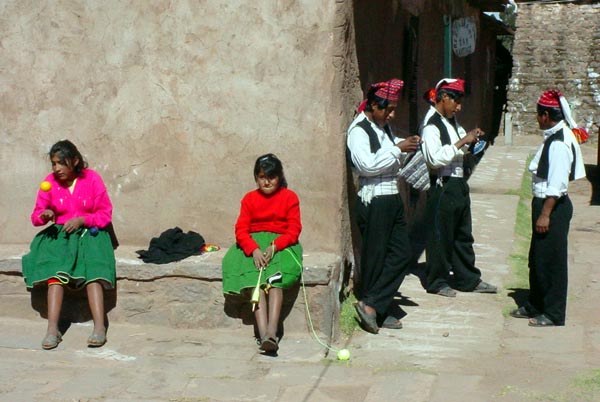
Isla tequila
This tranquil island has some very intriguing traditions. All men weir a hat. If the hat is red, the man is married. if the hat is red/white, he is single. All men also knit. They knit every second of the day. While they are walking, while they are talking, even while they are working. Work is arranged in a community organization. A man can work as a waiter in a restaurant one night, and the next night you might see him in a other restaurant, or standing behind a fruit-stall at the market. The girls spin wool and stalk men with red/white hats.
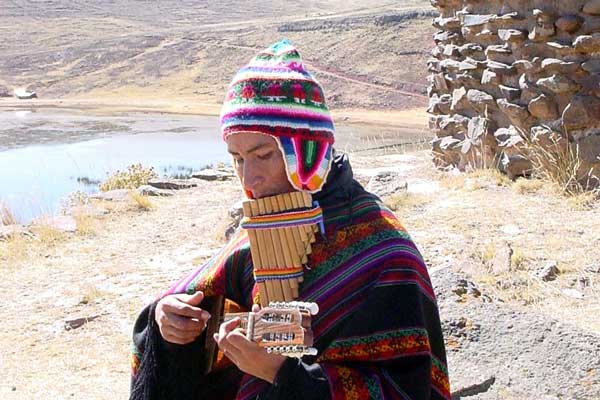
Silhoustani artist
While wandering around a the funeral-towers of Silhoustani I met this very gifted musician. Apart from playing some relaxing tunes he showed me a petroglyph of the universe and comet Haley.
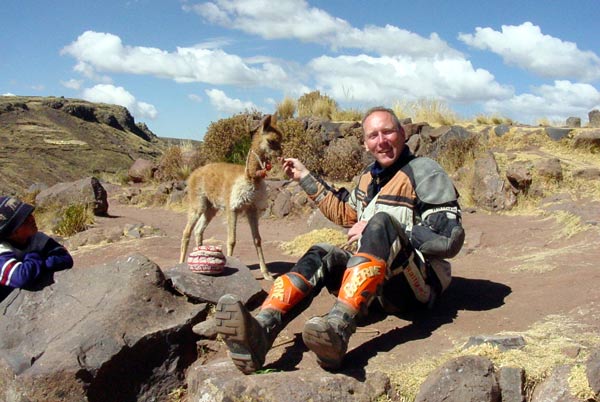
Baby Vicuña
Also at Silhoustani I came across this curious baby vicuña. These animals are like fairytale creatures.
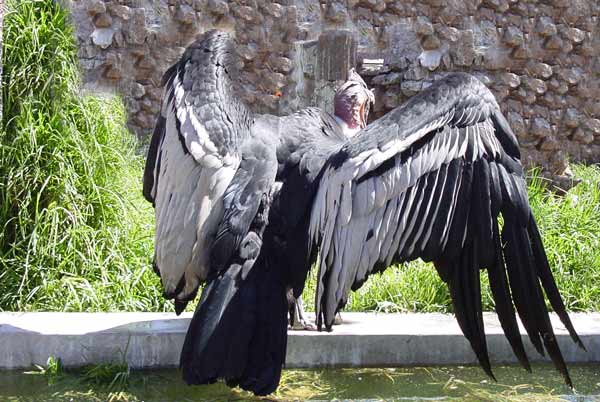
El Condor
The largest bird in the world with a three meter wingspan. It is a good thing it is a vulture. Imagine a predator that size.
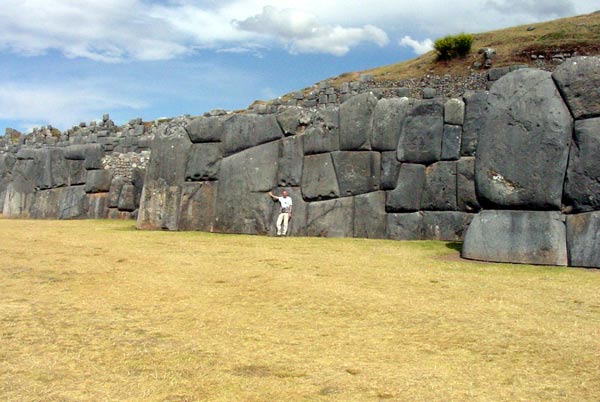
Inca masonry
For years I had heard of the Incas, their advanced culture and there ability to construct huge and sophisticated buildings. But I never could imagine the scale of their craft. Imagine those big blocks, they must weight many tons each, but each and every one fit's exactly in it's place and every one has a different shape, even a different number of corners. Still, you would not be able to insert a razorblade in the seam.
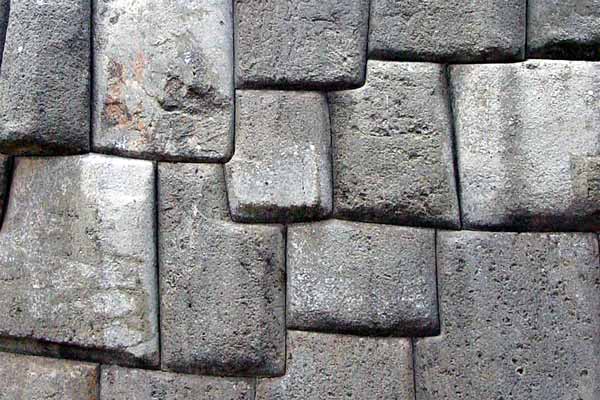
Inca masonry
Even most of the straight lines are slightly curved. It is no wonder these walls have survived earthquakes and plundering conquistadores.
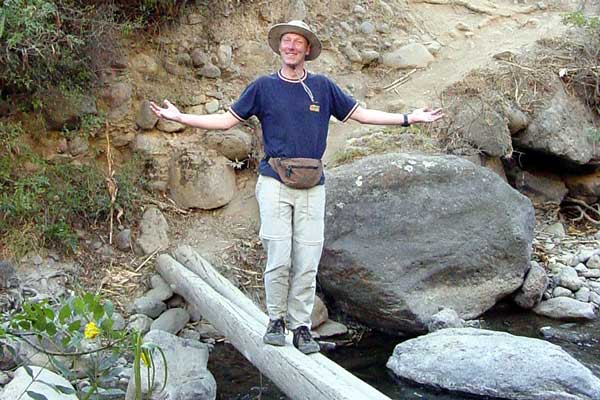
Sneaking in
Some of these Inca sites are so steeply priced that you need to use some imagination to get in (without paying the entry fee). Most of the time a local, who sees all the money of his cultural inheritance go to lawful but unrightful owners, is more than willing to help you. If you give him a small token of your appreciation he will usually even give you a extensive tour. This is the (secret) entry of Oliantantambo. It's located around 300 meters on the right of the official expensive entry
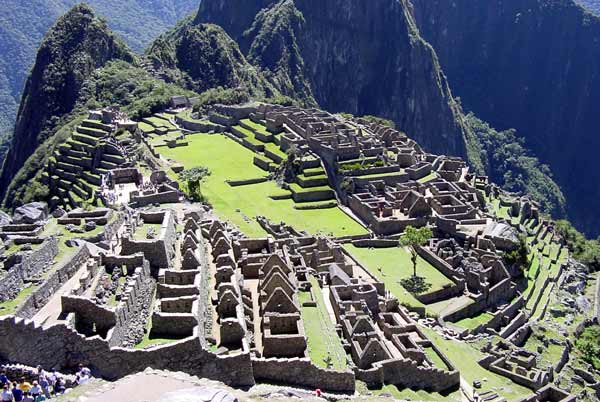
Machu Picchu
The summer resort of the Incas. It lies so perfectly hidden between the mountains it has never been discovered by the conquistadores. For hundreds of years it was forgotten until in 1911 it was rediscovered. It is not the only 'forgotten city' in south America, but it is the most well known.
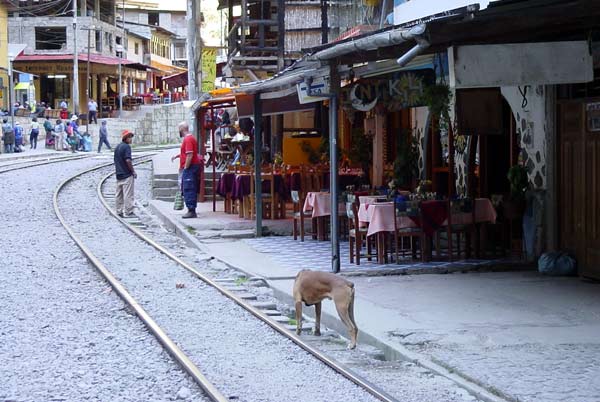
Agua Caliente
The name of the town means 'hot water' but the hot spring is not why people come here. It is the last and obligated stop before reaching Machu Picchu. The town is build on a narrow stretch of land between the river and the mountain, so space is very limited. Dining next to the railway is just the way it is.
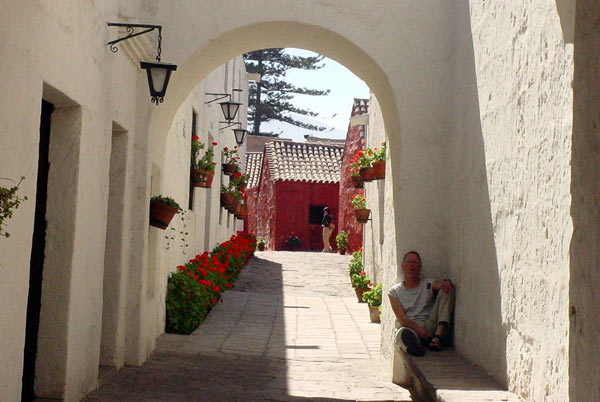
Convent Catalina
In Arequipa the convent Catalina spans several city blocks. In fact, it is so big, it forms a city of itself. This is one of the many streets inside the convent.
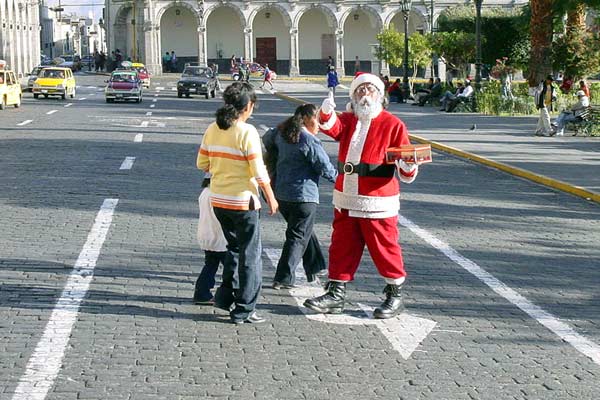
Santa's secret hideout
So where does Santa go when the north pole is closed for the holidays? Arequipa, Peru. he probably live in the Convent Catalina and dates the ice-princess.
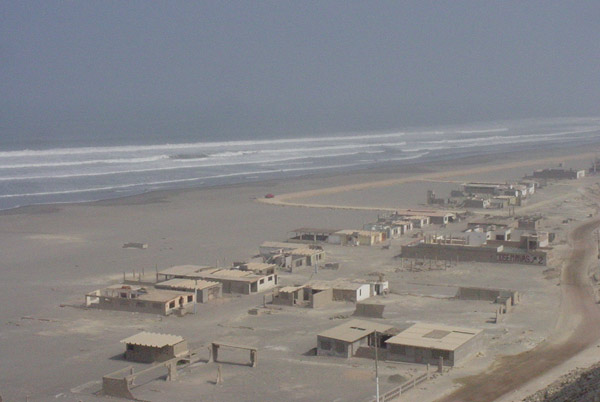
Beachfront property
There is nothing like a cold gulf stream to ruin your beachfront property. Cold water and hot air, not a good combination. The sun is only a few days a year visible.
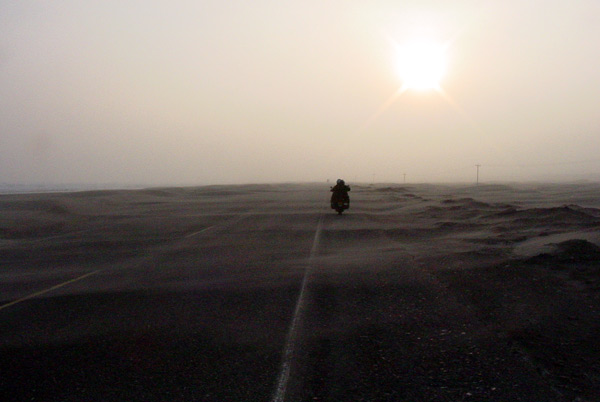
Beachfront desert
The coastal road in south Peru is mostly a misty desert. Boring in the day, but mysterious during sunset.
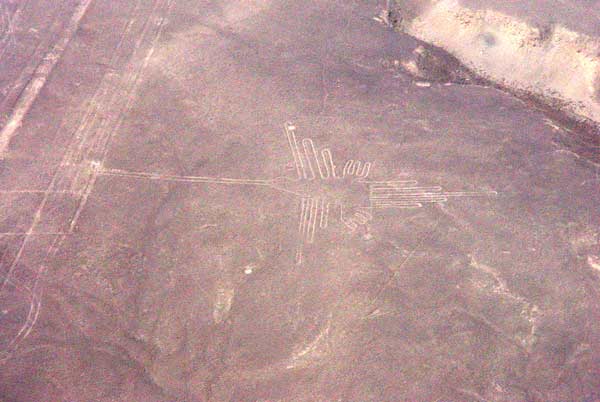
Nazca lines
Huge drawings are scattered across the Nazca desert. How and why they were made remains a mystery. The drawings can not be seen from the ground. Only in a plane they become visible. Strangely they originate around 2000 years ago, when planes were not that easily available. Was it the culture of the long ladders?
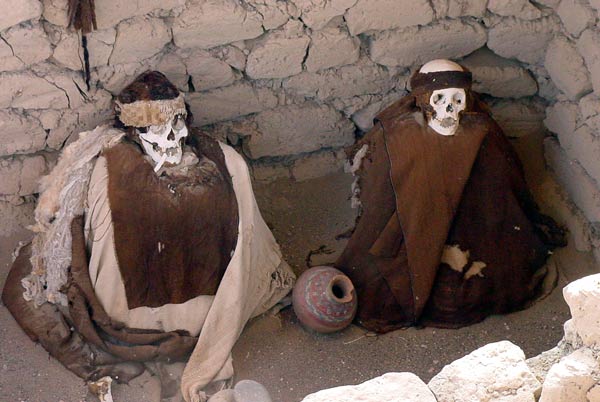
Nazca mumies
Why close a hole you just spend hour to dig they must have thought. or were they concerned that the dead would get dust in their eyes? As a result you can now visit this rather unusual graveyard.
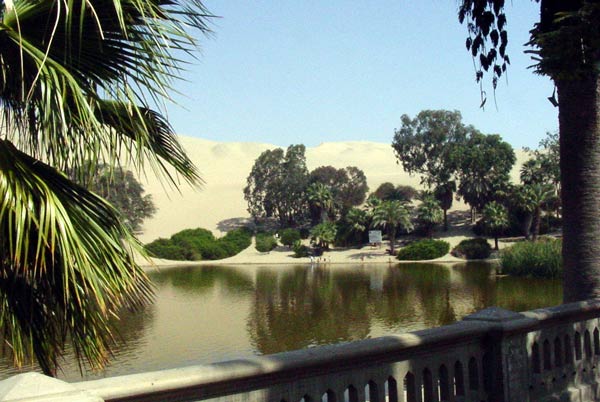
Oasis Huancachina
What do you do when the desert threatens to overrun your city? You turn it into a sand boarding paradise. Situated around this peaceful oasis several sand boarding tour-operators exploit cheap hotels. With high-powered dune-buggy's guest are taken into the desert to spend the day on a snowboard, but then in the sand.
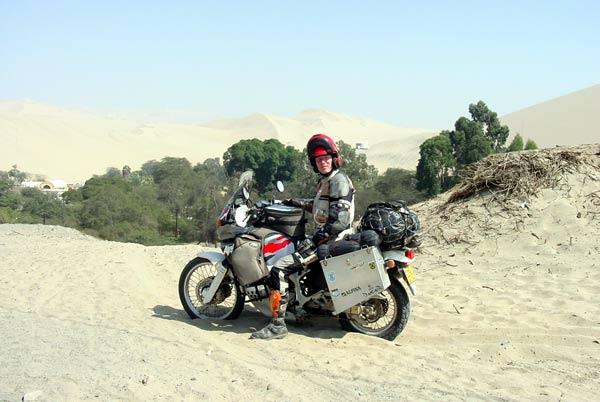
The road to Huancachina
Sand has always had an attraction to me and sand boarding 300 meter dunes is not something I can ignore.
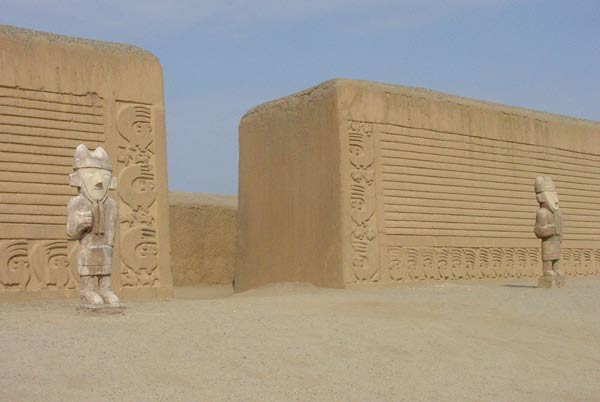
Chan chan, another lost city
The Incas were definitely not the only culture to inhabit Peru. There were many before them that have left their marks. This city of Chan chan, build out of sand, is one of them. It is roughly ten times the size of Machu Picchu and a lot more accessible.
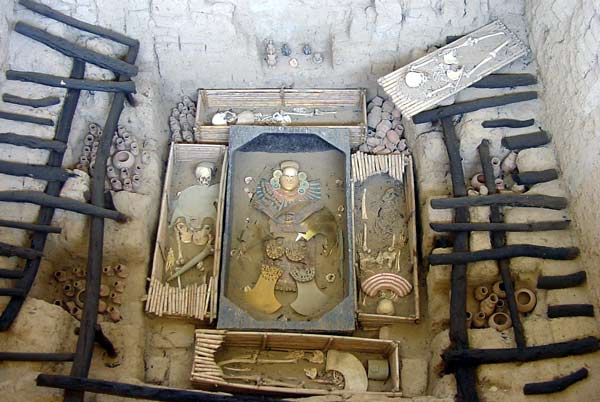
Tomb of signor Sipan
After excavating the tombs of Sipan they replaced the artifacts with replicas so visitors can see the site exactly the way it was discovered.
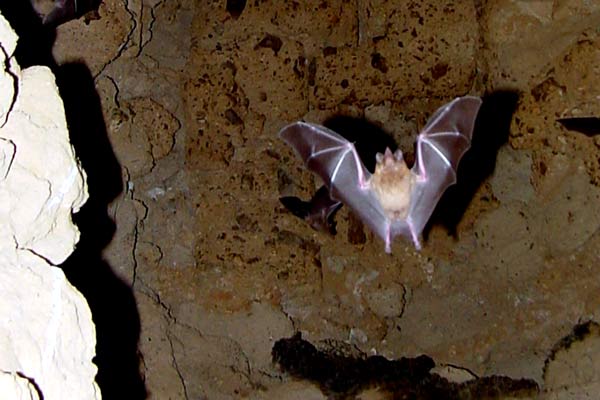
Tomb of signor Sipan
The only things that are not replicas are the bats that inhabit the corridors of the pyramid. Luckily they don't bite, but they do 'p' on you.
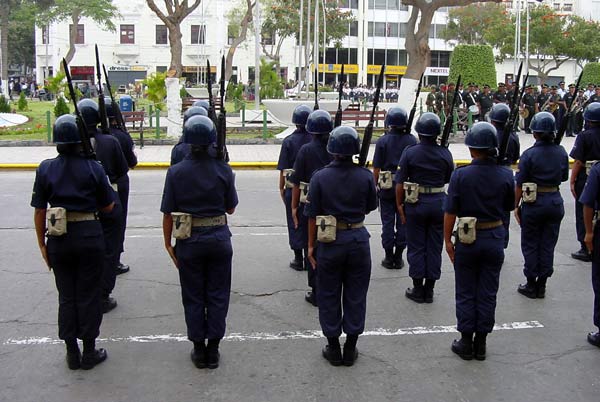
Cup America
Just when I wanted to leave my hotel the doors were blocked and a ceremony started. The cup America started that day in Cyclayo. I figured they would not appreciate me riding my bike through their cordon of armed forces, so I just waited it out..
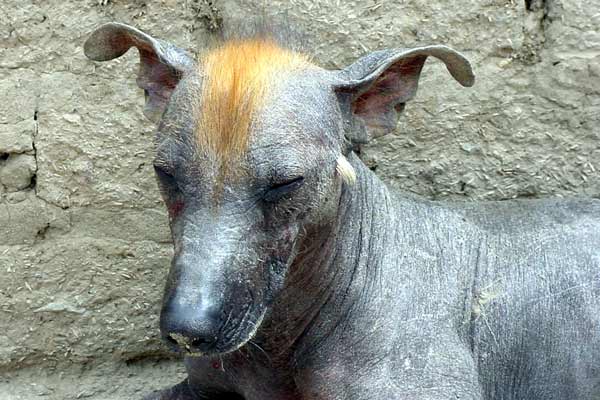
Inca dog
Believe it or not, this is not a genetically defected or mutated dog. This is a pure bred naked Inca dog. It looks horrible, but at least it does not have flees.
Ecuador
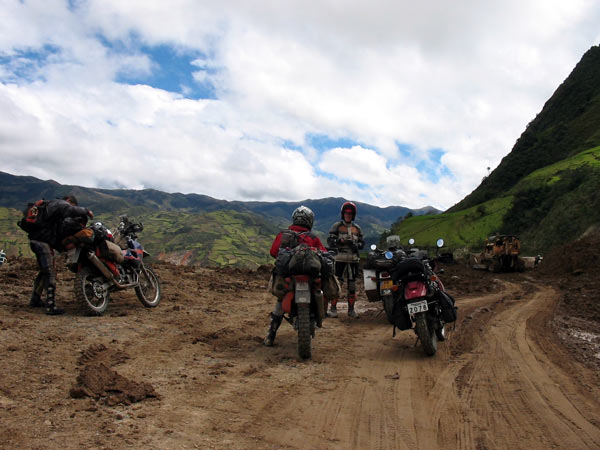
Land slide
Ecuador seems to be plagued by natural inconveniences. Earthquakes, floods, volcanoes and land slides like this one.
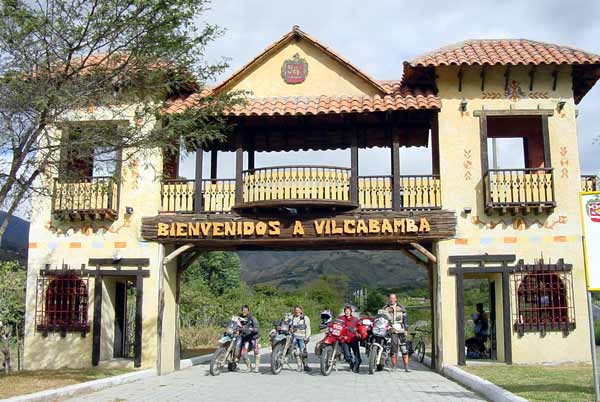
City of old people
In Vilcabamba people grow old. Very old. Somehow the valley has a healthy effect on people.
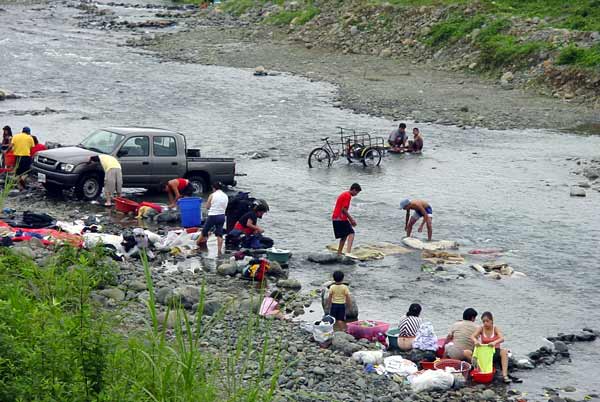
Monday, wash day
Everything gets washed today.
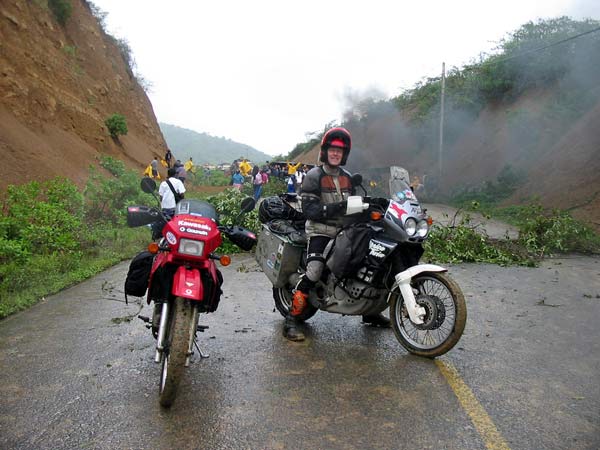
Running the barricades
One of the good things of riding a motorbike is that you can pass most barricades. Not only because you fit through, but also because the people that have build the barricade usually are friendly towards motor bikers.
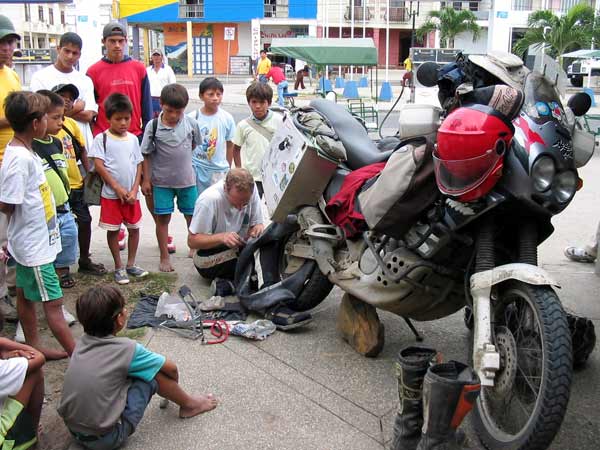
Such an interesting job
Did you ever watched some one fixing a flat tire? It is such an intriguing job. Or at least, that is the opinion of these people.
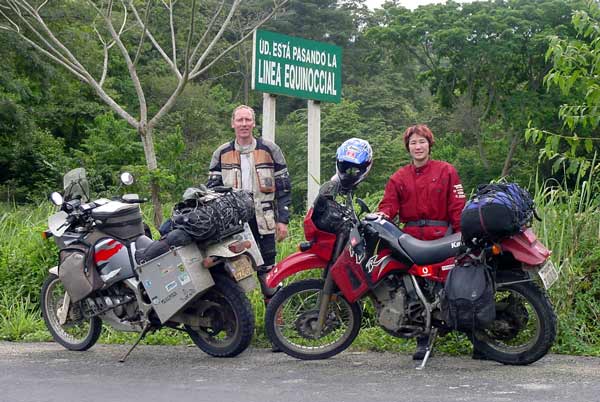
Crossing the equator
It is called 'the equator monument' on the map. A part from the fact that it is placed 90 meters to far to the south, it's also not what I would call: 'a monument'.
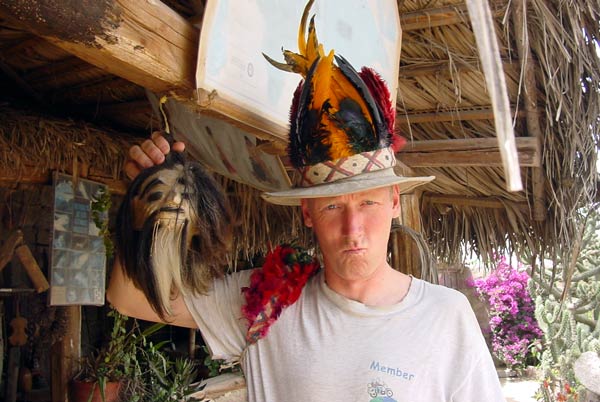
Head shrink
A walk in the jungle could ruin a perfectly happy day. Especially if you meet the 'head shrinkers'.
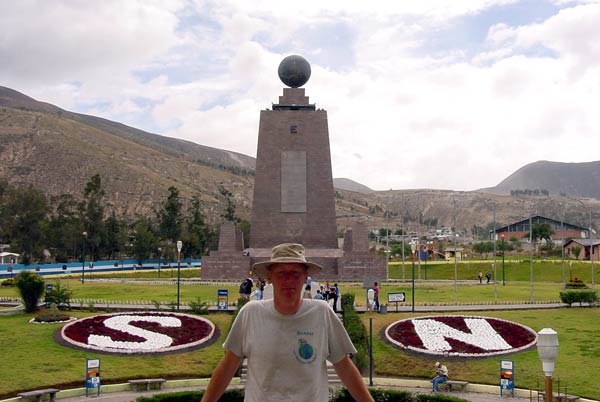
Equator line
OK, this is what you would call a monument. It is still build in the wrong place, but I guess that without a GPS it is a pretty difficult job to find the equator.
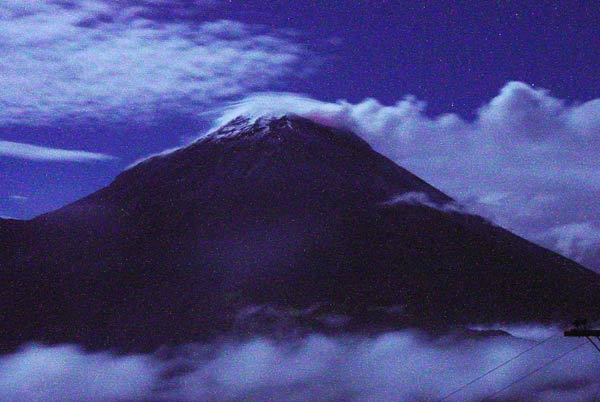
Cotopaxi
In the background the highest volcano in south America: Cotopaxi. Too bad it was so cloudy. Even more bad it remained cloudy for days and days.
Baños
Another volcano is located near the town of Baňos. The town is on 'red alert', but it has been that now for years. This 5,000 meter high volcano is deciding for itself when to pop out it's cork.
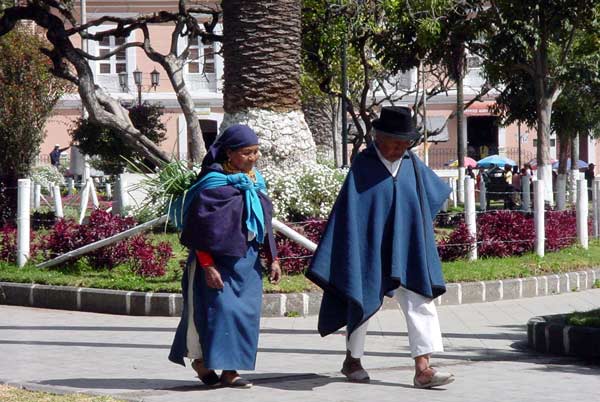
Otavalo folklore
The town of Otavalo is known for it's folklore. Unfortunately it's also know for the inhabitants unwillingness to pose for a photo. Sitting on a park bench with my camera hidden underneath my armpit I spend hours to get a nice photo.
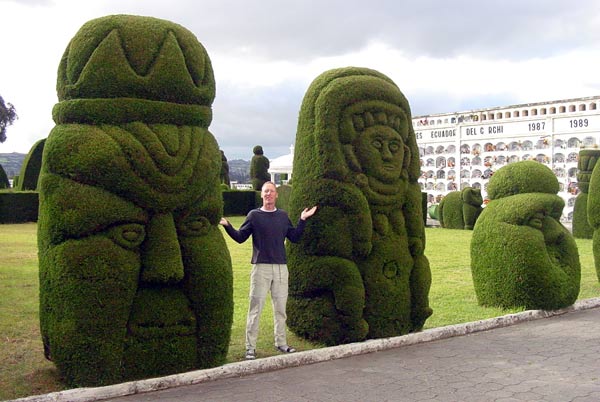
Tulcan cemetery
In Tulcan they lightened up the cemetery by sculpturing all sorts of shapes from shrubbery.
Colombia
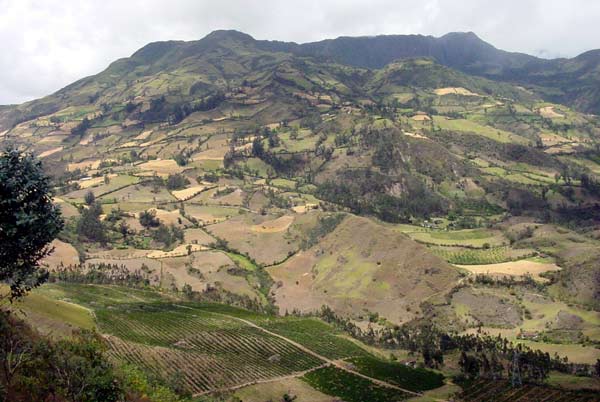
Scenery
Colombia is a very scenic country.
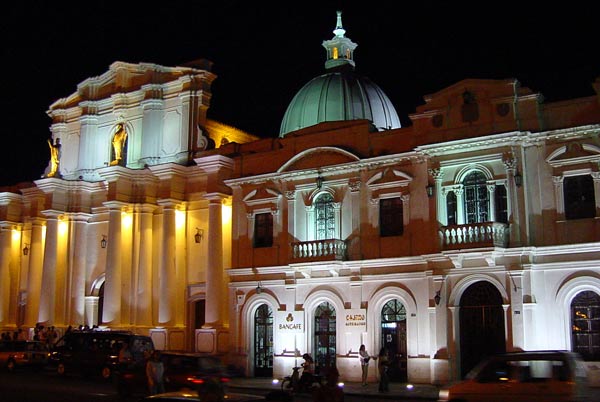
Architecture in Popayan
It also has some remarkable colonial architecture. This is the centre of Popayan.
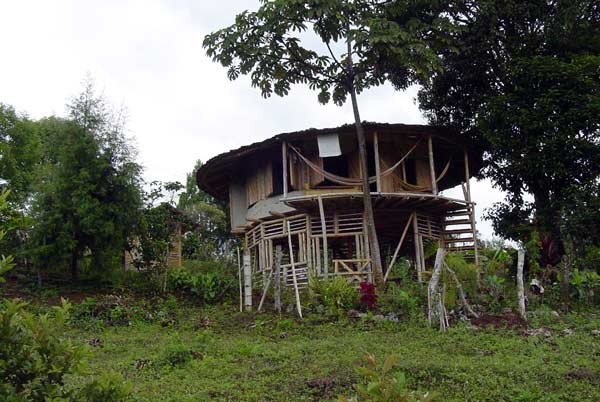
Architecture
My guesthouse-room in rural village of San Augustine.
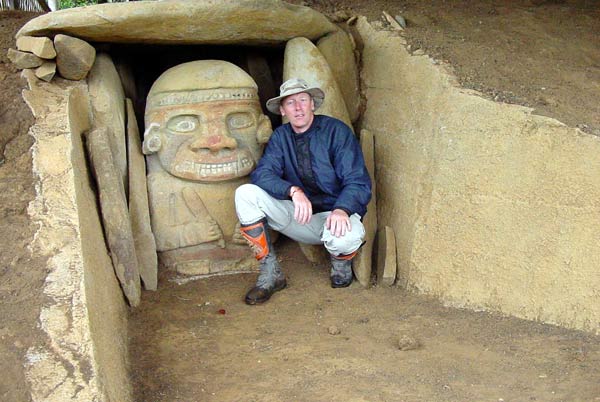
Archeology in San Augustine
San Augustine is famous for it's tombs and statues. Unfortunately the road to San Augustine is also famous, for it's FARC guerilla roadblocks. Luckily they were not to interested in me.
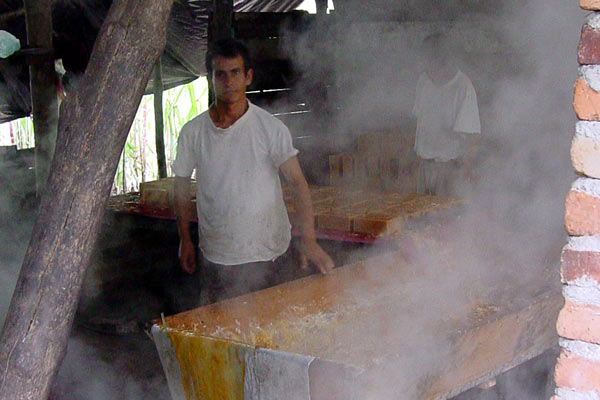
Main rural product
You might think that coca is the most produced rural product, but in reality it is pannella, a form of cane-sugar. The production process looks just as mysterious as cocaine, but it's a lot less dangerous.
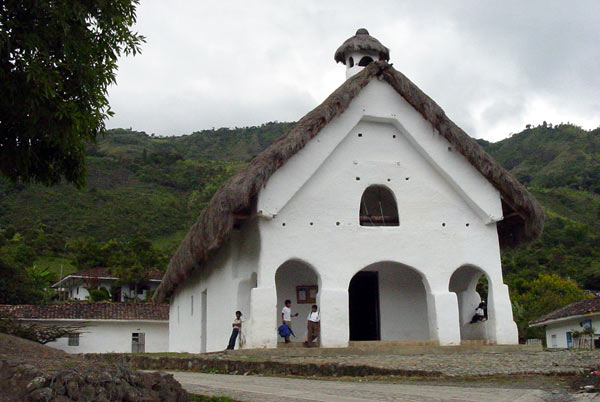
Church of Tiera del entro
Not to far from San Augustin lies the small village of Tiera del entro. It's famous for it's painted tombs though due to limited public transport not many tourists visit it. While I was there, only one other tourist was in town.
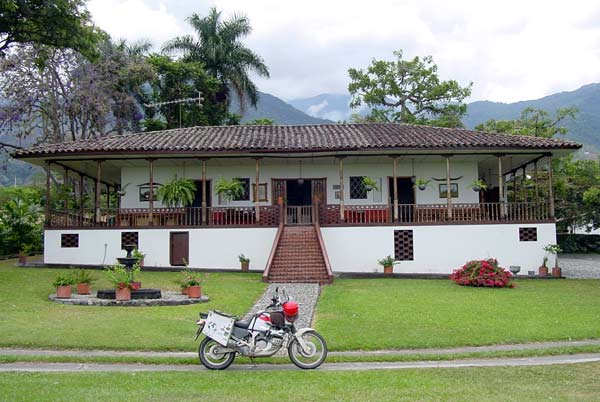
Nice shack
I don't know who lives here, but it must be a wealthy and influential person. Unfortunately, when I visited no one was home. The architecture is that of a typical Colombian hacienda.
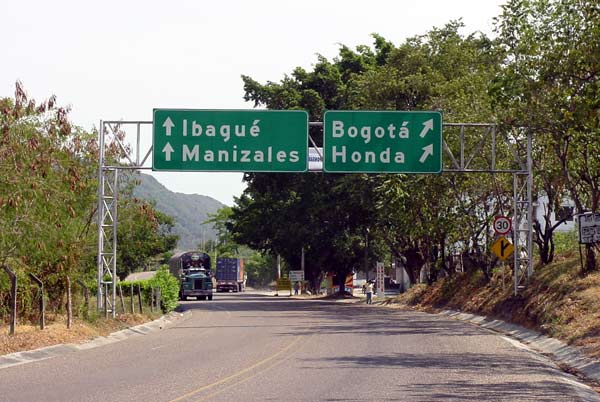
My exit
Hondas are so extremely popular in Colombia, they have special roads for them.
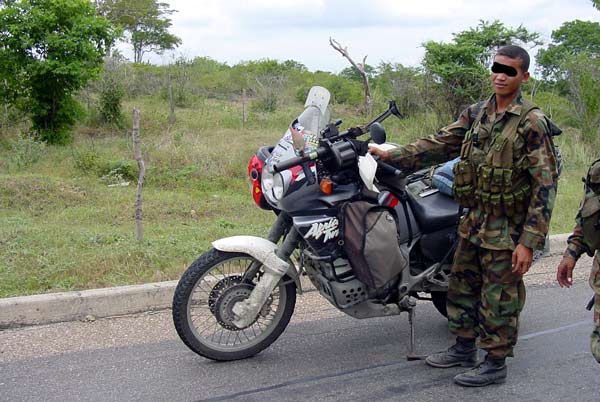
Truck killer
Truck drivers are absolutely the biggest danger in Colombia. This little gadget will keep them at a respectable distance or reduce them into harmless chunks.
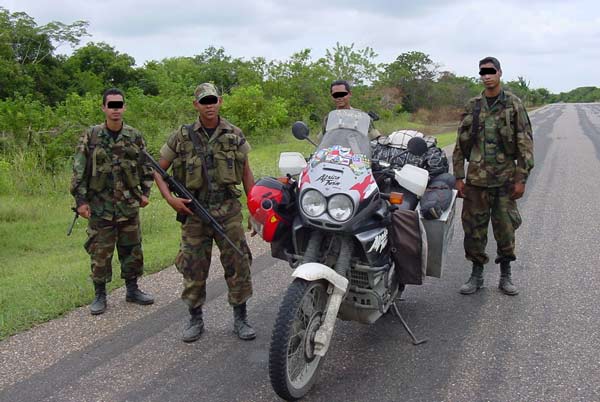
the bad guys ?
When ever you meet soldiers that have guns but no markings or insignias on their uniforms it's a good idea to be friendly and helpful. After trying to fit their truck-killer on Pam and sharing a bottle of cold water they did not mind being on the photograph as long as it was not published in Colombia.
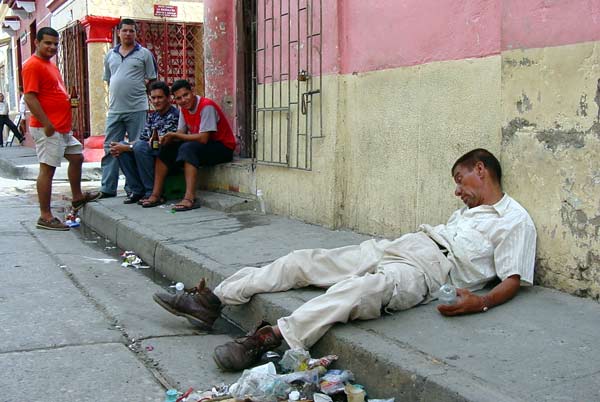
Daily life
In the less touristy areas of Cartagena you can witness daily life in the big city.
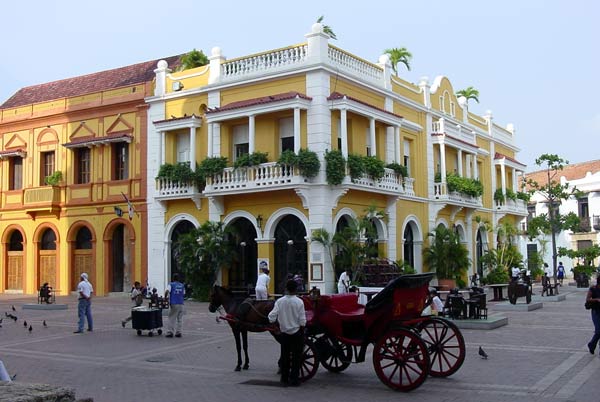
Beautiful Cartagena
Cartagena is absolutely one of the most beautiful colonial towns in south America. The old city-centre is completely renovated in the old style.
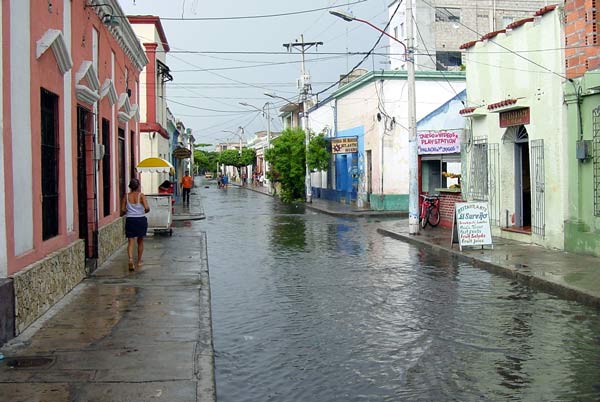
Santa Marta after rain
After every substantial rain the streets of Santa Marta are flooded and, as a result, cleaned. Sometimes a bit of a nuisance when you need to be on the other side of the street but you can't have it all. At least, not on the same day.
Venezuela
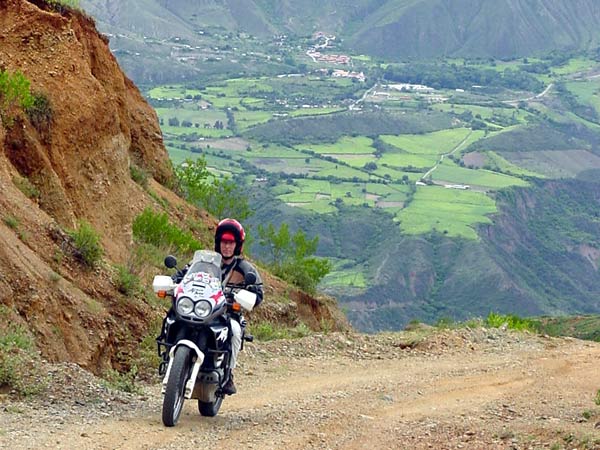
Merida back roads
Mountain town Merida has many scenic back roads. Views are superb, road surface can be a nightmare
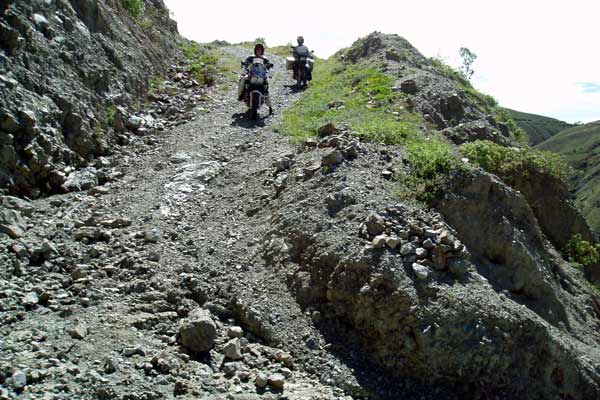
Merida back roads
The nastiest problem was, there was no way back. Not by bike that is. So we had no other choice then to go forward. As usual luck was with us and just when we started to wonder how much a helicopter rescue would cost, we found the way out.
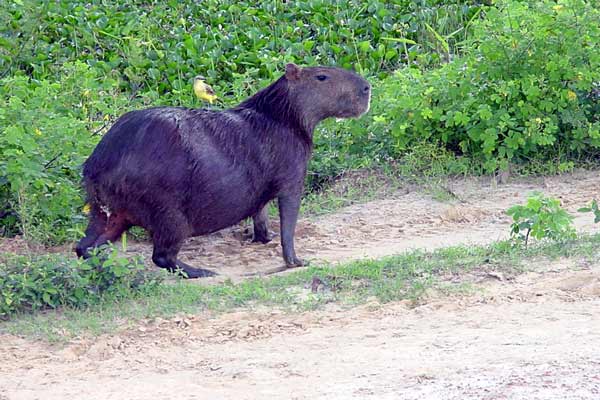
Giant guinea pig
I had seen them first in Brazil, but here in Venezuela they came close enough to have a good look at them.
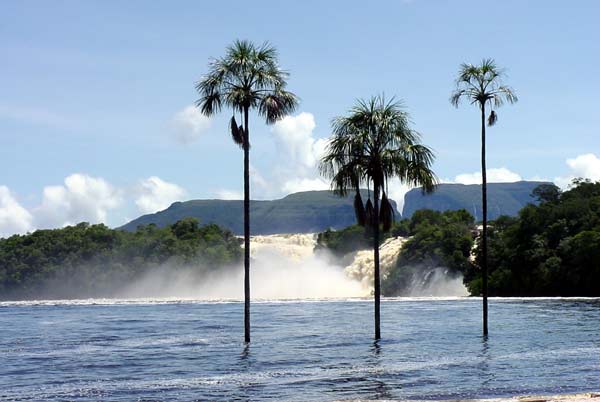
Canaima
On the way to see Angel falls you first have to go to Canaima. It's a beautiful settlement on a lake with three impressive waterfalls. From here the only way to the falls is by boat.
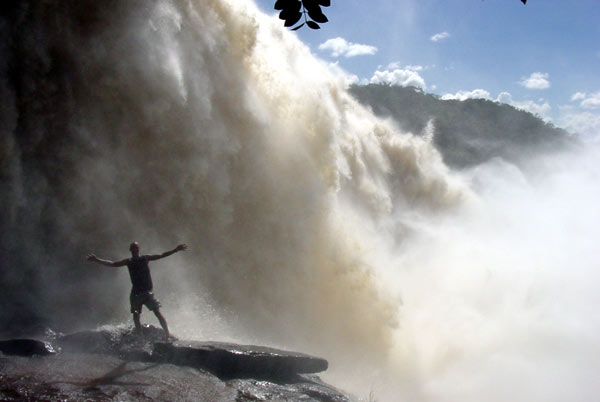
Canaima
On of the canaima falls. A tunnel of water leads you under the falls. You have never even been that wet.
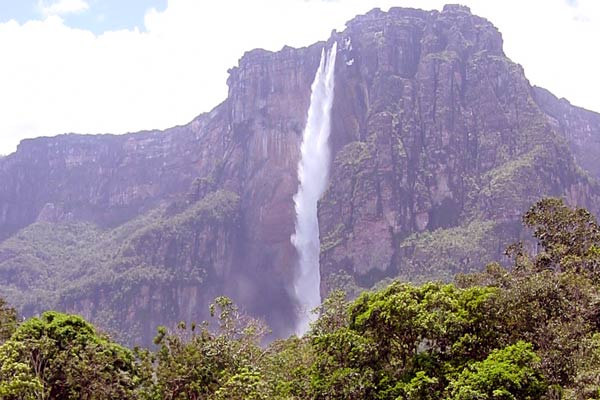
Angel falls
The highest waterfall in the world. With it's almost one kilometer drop. It can only be reached by a combination of plane, canoe and foot but it is well worth the effort. Once you are standing underneath it you forget the exhausting journey. You even forget the fact that you still have to go back.
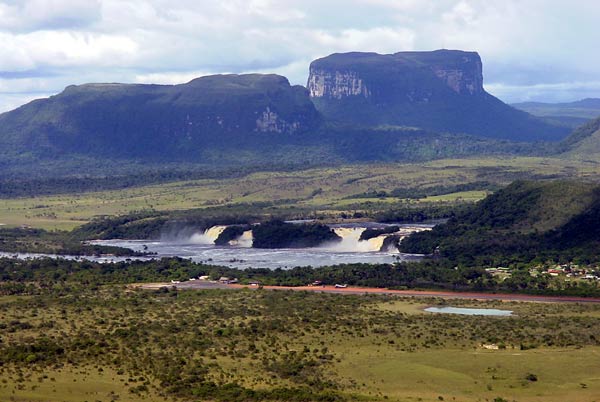
Leaving Canaima
Leaving Canaima you catch a last glimpse of the incredible scenery that surrounds it.
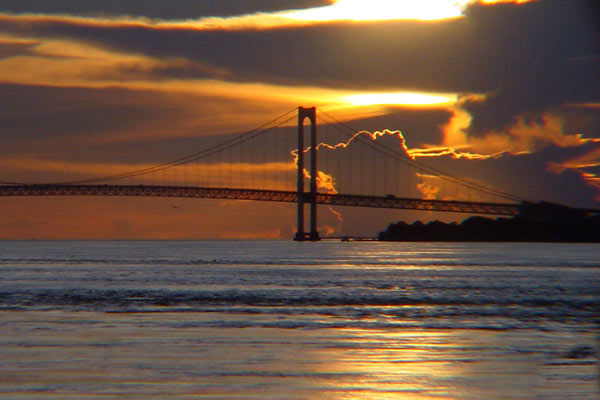
Bridge over the Orinoco
Seen from Ciudad Bolivar, the bridge over the Orinoco.
Brazil
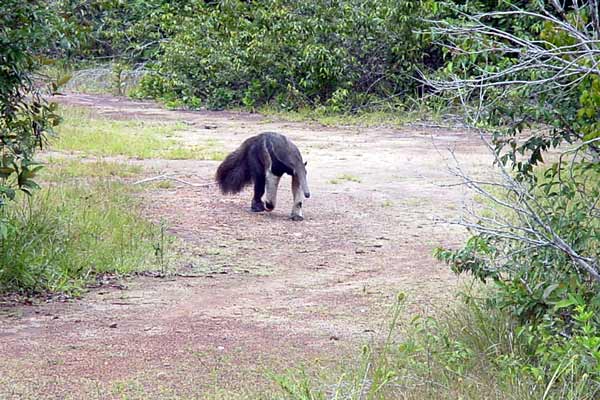
Strange animals in the Amazon
On my way to cross the Amazon jungle. This ant-eater stalked me a while. He probably thought I had an ant-sandwich.
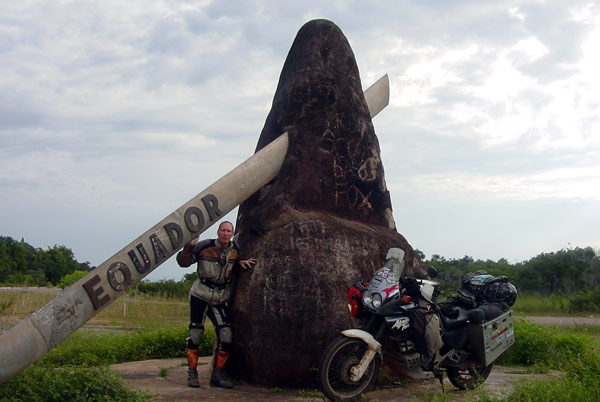
Another equator crossing
I kept crossing the equator. This time in Brazil.
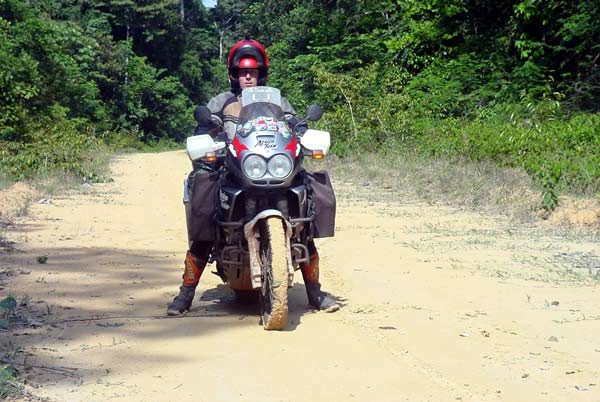
Sticky road surface
It is some sort of white mud. Not deep, not slippery, but it does stick to the tires and after a while the front wheel gets stuck in the mudguard.

Front sprocket
In Manaus I bought a new drive-chain but since I could not get new tires I changed my plan from crossing the Amazon to Guiana in turning back to Venezuela. A few hundred Km north of Manuas the new chain snapped in three pieces and ripped all the teeth of the front sprocket. Unfortunately a few hundred Km north of Manaus is the middle of the Amazon jungle.
Venezuela
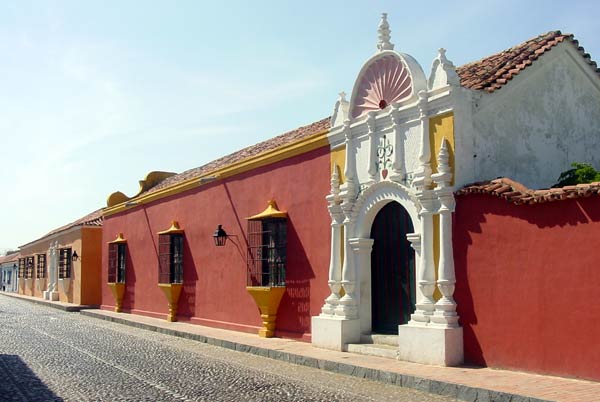
Architecture in Orro
On the north coast of Venezuela there are some very nice beaches to be found. Also there are a few picturesque colonial towns.
Colombia
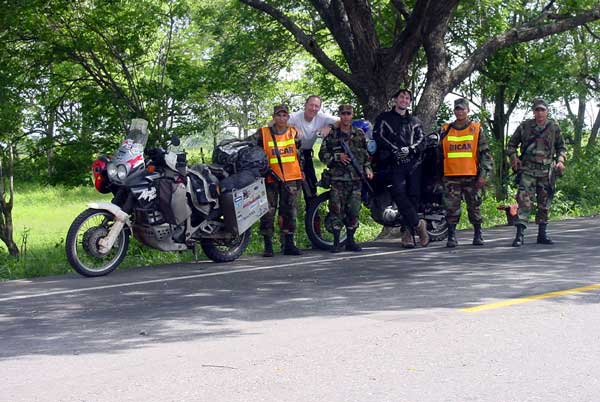
Back on controlled roads
Back in Colombia there are more soldiers on the side of the road then trees.
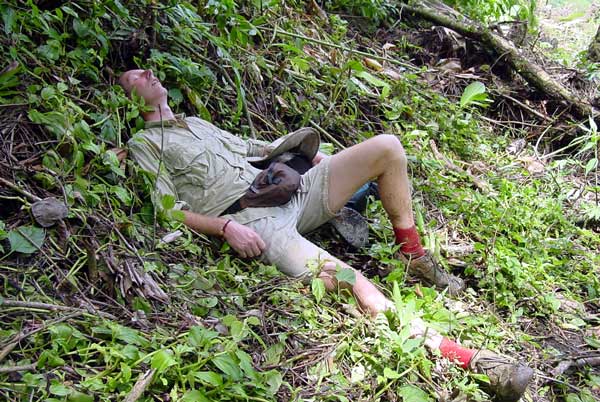
On the way to Ciudad perdida
On the way to Ciudad Perdida, the lost city. It is one of the hardest jungle-treks in the world. Heat, rain, mosquitoes, mud, uphill, downhill and burning sun. Six days of total exhaustion.
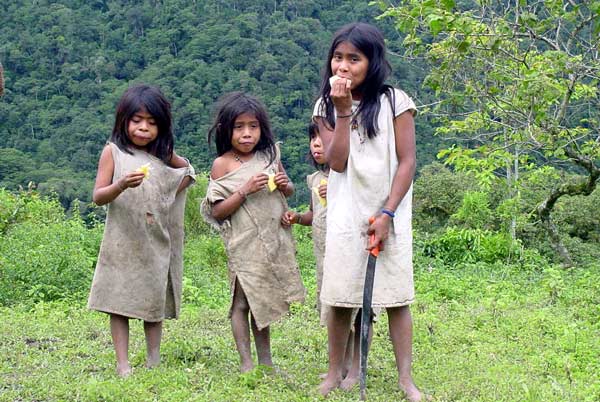
Kogi
An indigenous tribe called Kogi is still living according to tribal rules and traditions in the sierra nevada where the lost city is located.
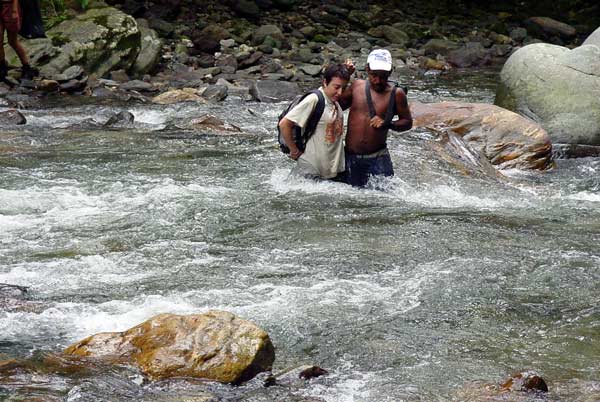
Search for the lost city
On the final approach to the lost city we have to follow this river upstream. To do so we have to cross the waist high wild water eight times.
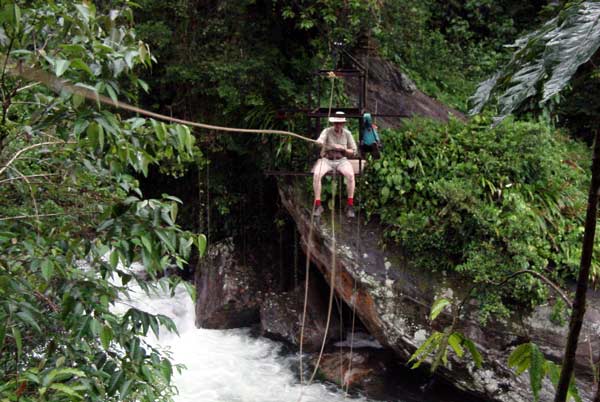
Search for the lost city
One of the surprises that was waiting for us.
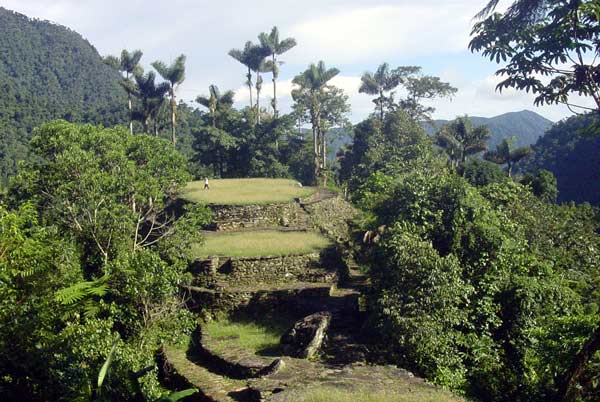
Ciudad perdida
After climbing a 2600 steps, ancient, slippery stairway, we finally arrive in the lost city of Tyrona. It is very different from other sites like Machu Picchu or Chan chan. For one thing, we are all alone here and most of this site is not yet excavated.
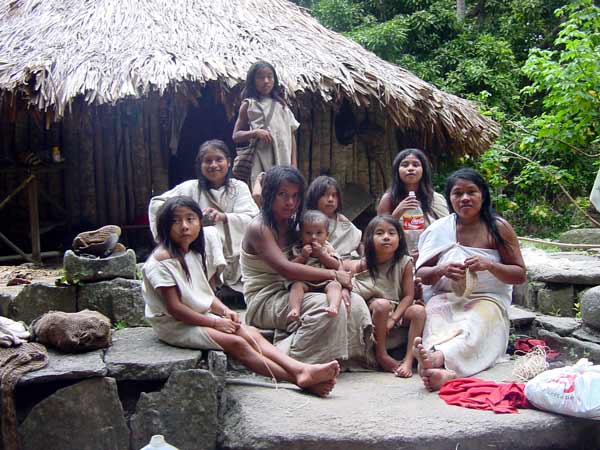
Kogi family in Pueblito
I spend one night in the small town Pueblito. For one bag of coffee and a bar of pannella me and my companion rented one of their huts.
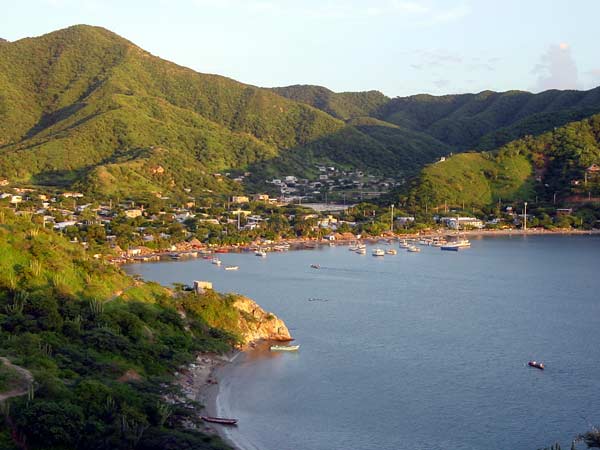
Taganga
Close to Santa marta lies the fishing-village of Taganga in a secluded bay with a gorgeous beach and all the cool drinks you wish followed by a splendid meal of fresh fish.
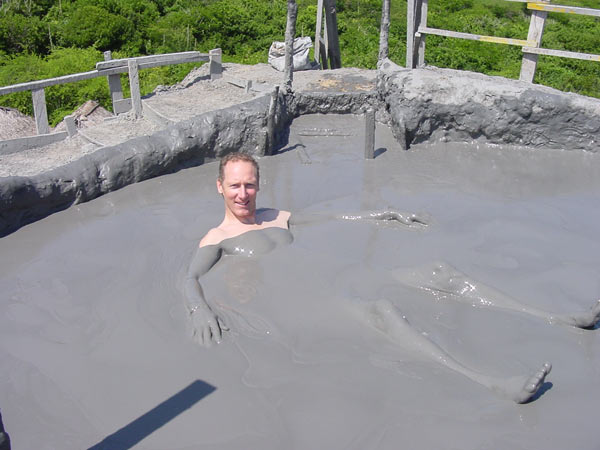
Volcano dipping
A mud-volcano is very much like a regular volcano except that in stead of lava, it is spitting out mud. Deep underground, in this case 2,700 meters, a layer of vegetables is slowly decomposing, producing gassy mud that escapes through a regular crater. It even forms a volcano-shaped mount. It is very weird to step into this bottomless pit of mud, but it feels good once you float in it. Now it's waiting for the first championship mud-volcano-wrestling.
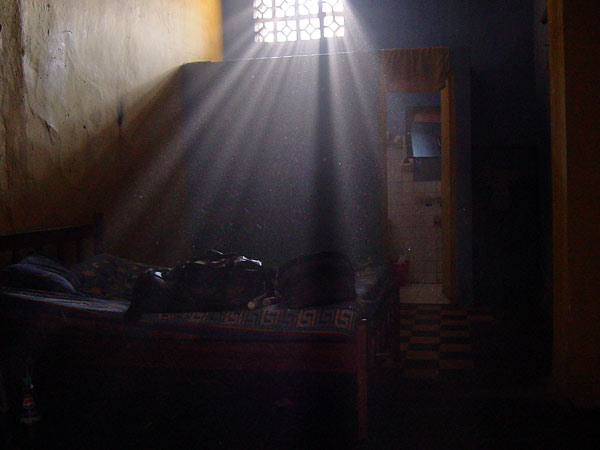
Hotel room
As a traveler you have to get used to the fact that your hotel room sometimes has more of an ancient dungeon. After all, it is only a place to sleep in.
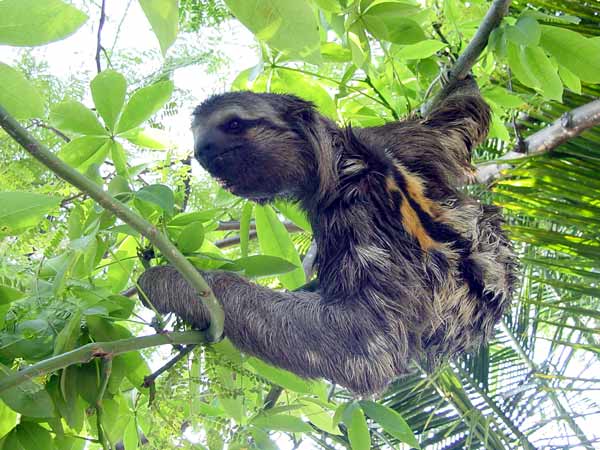
Sloth
One of the weirdest animals you have ever seen is the sloth. he lives in tree's and is a master climber, but it all happens in slow motion. He looks more like ET then a regular tree-dweller like a squirrel or a monkey
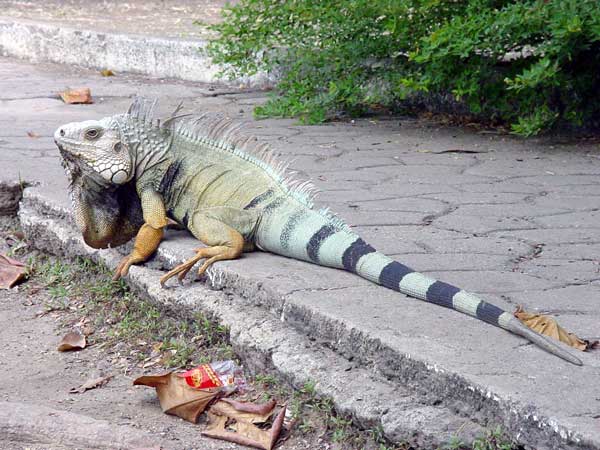
Iguana
This iguana is walking around in the Cartagena main plaza. He bothers no one and no one bothers him.
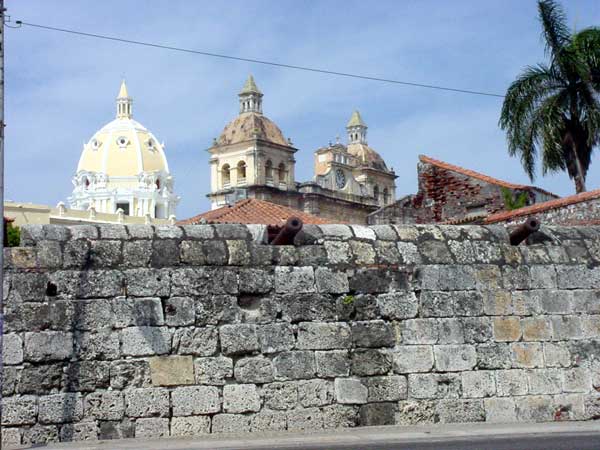
Colonial Cartagena
I spend my last days in south America in Cartagena looking for a boat to take me and Pam to Panama.
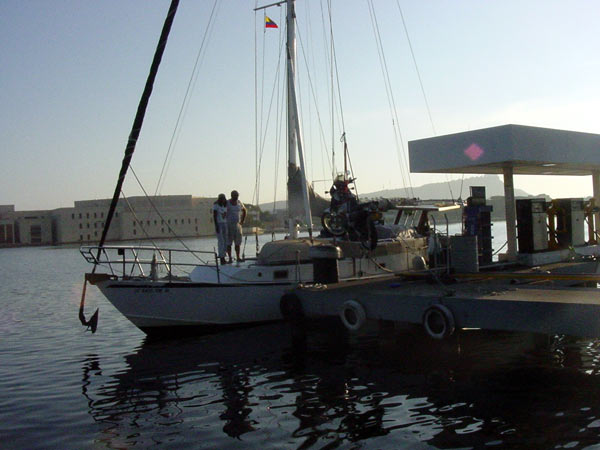
Sailing boat 'Melody'
I met Capt. Marcus and his wife Paola in the marina and they agreed to bring me and Pam across the 'Darien Gap' to Panama.
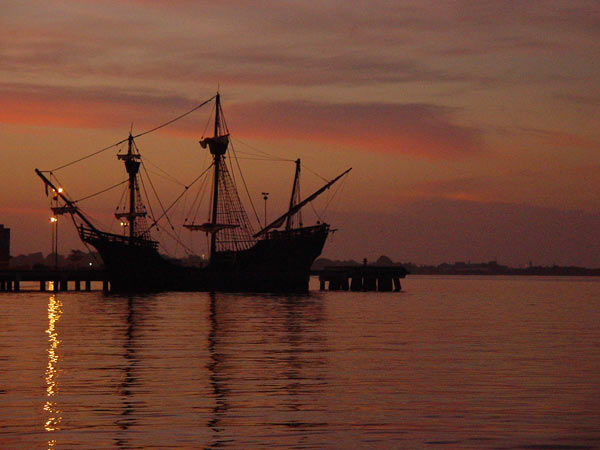
The marina at night
Since I was going to spend at least 5 days on board the 'Melody' I might as well check out my hotel and get used to live on board.
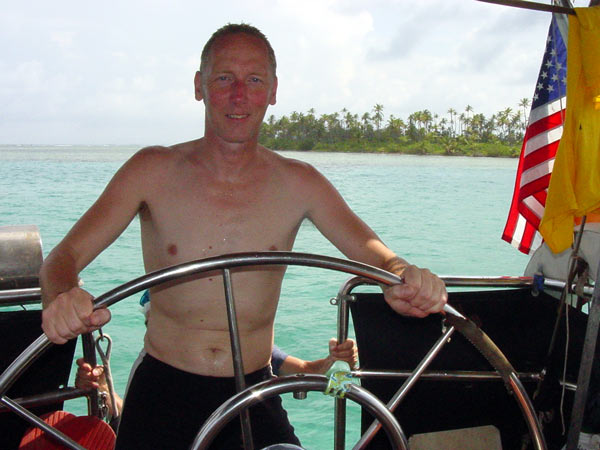
Take a break at San Blas
It took two days and one night in which we faced eight meter high waves, to reach the San Blas archipelago. We decided to chill out for two days before sailing the last stretch to Colon. I did steer the boat, but only for 15 minutes or so before sea-sickness forced me to hang over the railing and enjoy my food for the second time.
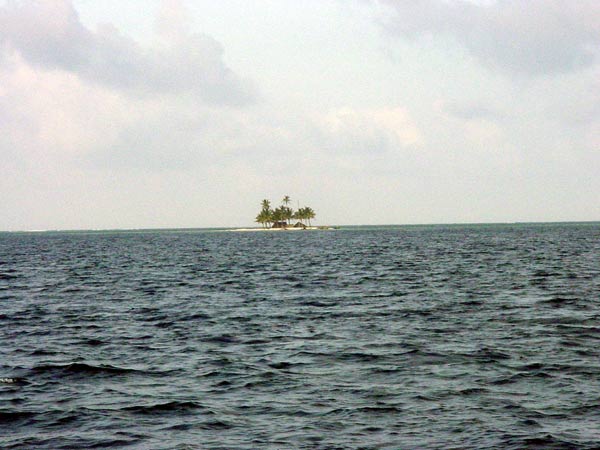
Life on an island
It sounds like a dream. Having your own tropical island to live on. But what if it is only this big?
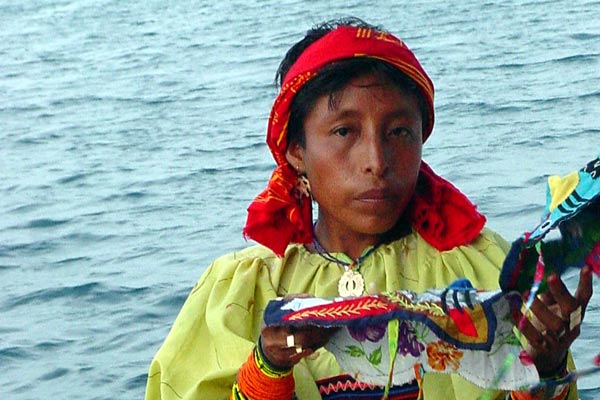
Kuna
The Kuna live in the San Blas archipelago. They fish and trade with ships that pass by.